






















Housemarque Unveils Graphite: A New Framework for Enhanced Visual Effects in Saros
Housemarque, the renowned game development studio, has announced a significant advancement in its visual effects technology with the introduction of Graphite, a unified framework designed to enhance the rendering capabilities for its upcoming title, Saros. This new engine represents a culmination of thirty years of development and aims to elevate the gaming experience by integrating sophisticated visual effects directly into PlayStation hardware.
The Evolution from NGP to Graphite
Housemarque’s journey began with the proprietary particle engine known as NGP (Next-Gen Particles), which started as a prototype for Resogun in 2013. Over the years, it evolved through various titles, including Returnal. By the time development on Saros commenced, NGP had matured but was also burdened by twelve years of incremental decisions made in isolation for specific games.
With the transition to PlayStation Studios, Housemarque recognized the need for tools that aligned with their evolving identity as a studio. The introduction of Graphite marks this shift. It consolidates GPU simulation, rendering, tooling, and DCC (Digital Content Creation) integration into one cohesive architecture tailored specifically for PlayStation hardware.
Graphite not only retains the core elements of NGP but also enhances its capabilities. This framework is pivotal in maintaining Housemarque’s distinctive visual identity across its games.
Innovative Volumetric Fog Systems
One of the standout features of Saros is its advanced volumetric fog system. Unlike traditional fog in video games—which often serves merely as a visual filler—Saros aims to make fog an integral part of the game’s atmosphere. The team implemented two distinct fog systems: low frequency fog for ambient effects and high frequency fog for character-specific interactions.
Low Frequency Fog
The low frequency fog system builds on Unreal Engine’s froxel fog concept but has been significantly modified to meet Housemarque’s vision. The primary challenge was achieving temporal stability while allowing for dynamic interactions with fast-moving elements like cameras and lights. By adjusting the hysteresis coefficient from 90% to 50%, developers managed to maintain stability without sacrificing responsiveness.
This system employs several advanced techniques:
- A dual Henyey-Greenstein phase function that models light scattering based on viewing angle.
- A colored absorption coefficient that allows for a broader range of colors than traditional monochromatic solutions.
- A self-shadowing system that aggregates light sources into a dominant shadowing direction.
- A physically based sky lighting integral that ensures accurate distant lighting while optimizing performance.
The result is an interactive fog that responds dynamically to player movements and environmental changes, creating a more immersive experience.
High Frequency Fog
The high frequency fog system utilizes a custom ray marcher designed to optimize performance while maintaining visual fidelity. By clustering scatter data into manageable voxel groups and skipping empty regions during rendering, this method enhances efficiency without compromising detail.
This system is particularly effective in narrative-driven scenarios within Saros, such as during encounters with smoke creatures called Mirages. The combination of both fog systems ensures consistency and realism throughout various gameplay experiences.
Integrating Houdini Data into Graphite
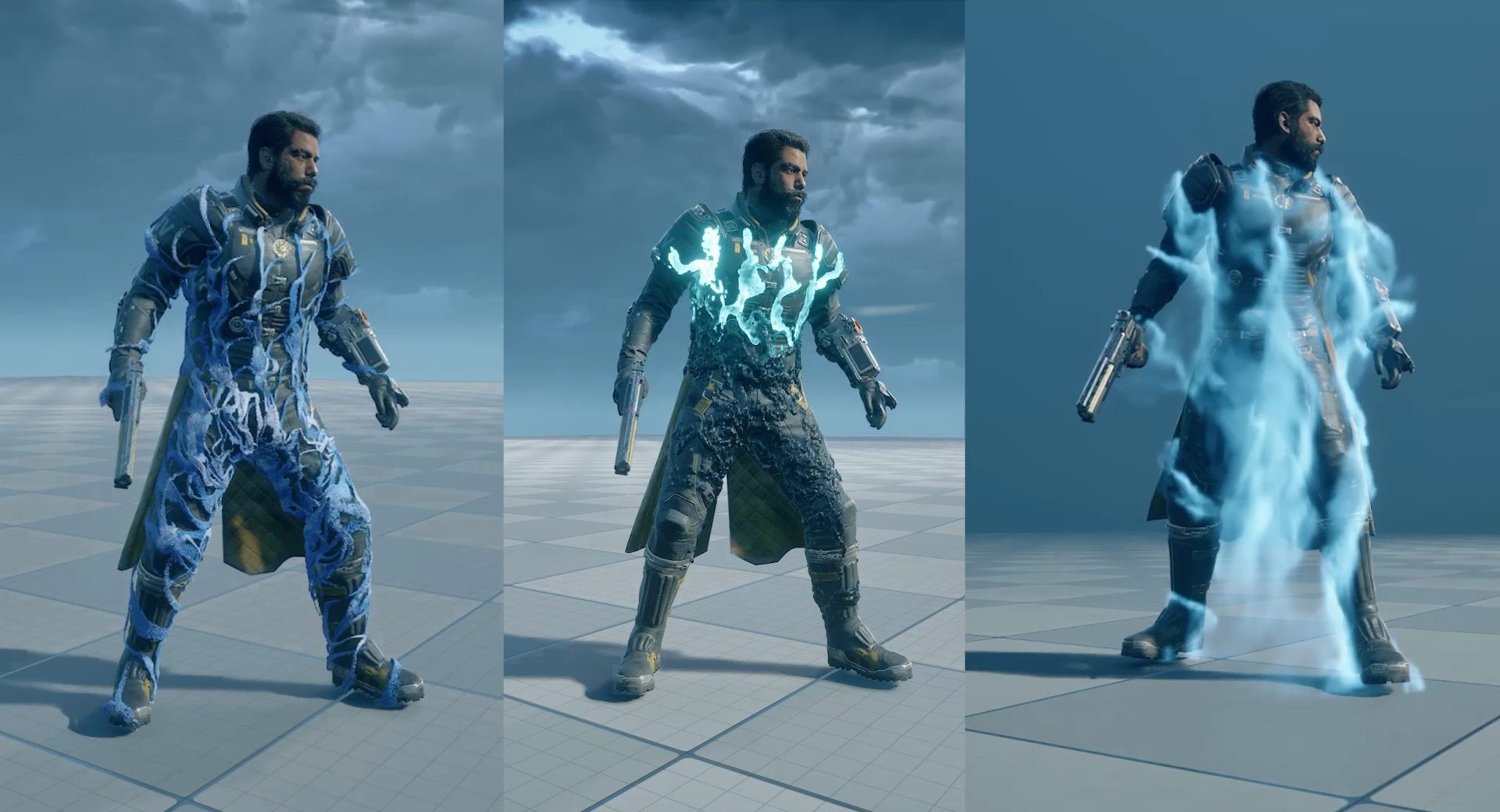
To further enhance visual effects, Housemarque has integrated data from Houdini into Graphite. This allows artists greater flexibility in authoring volumetric effects compared to traditional voxel-based methods used previously. The new approach involves two key tools:
- An Offline Houdini Data Pipeline that enables artists to pre-compute complex data efficiently.
- A Runtime Point Cloud Rasterizer that converts simulated points into real-time volumetric effects within the game engine.
This transition from per-voxel expressions to particle-driven density emission allows for tighter control over how effects are generated and animated within Saros. For instance, volumetric density can now be emitted from specific character parts rather than entire voxelized bodies, resulting in more dynamic and visually appealing effects during gameplay sequences.
A Commitment to Player Experience
The overarching goal behind these technological advancements is clear: every effect and simulation aims to evoke an emotional response from players. Housemarque’s commitment to innovation reflects their dedication to delivering immersive gaming experiences that resonate deeply with audiences.
What This Means
The introduction of Graphite marks a significant milestone not just for Housemarque but also for the broader gaming landscape. By prioritizing advanced visual effects and integrating sophisticated systems like volumetric fog and Houdini data pipelines, Saros promises an enriched player experience that emphasizes realism and interactivity. As technology continues to evolve within gaming studios, players can expect increasingly immersive worlds where every detail contributes meaningfully to gameplay dynamics.
For more information, read the original report here.