

















Young Stars Dim More Quickly in X-Ray Output, Study Reveals
Recent research utilizing NASA’s Chandra X-ray Observatory has uncovered that young stars similar to our Sun are dimming and calming down at a faster rate than previously understood. This study, published in The Astrophysical Journal, highlights the implications of this phenomenon for the potential habitability of planets orbiting these stars.
Understanding Stellar Activity and Its Impact on Planets
Astronomers have long been aware that young stars emit powerful radiation, particularly in the form of X-rays, which can significantly impact surrounding planets. High-energy X-rays can erode planetary atmospheres and hinder the formation of essential organic molecules. However, the duration of this intense radiation output remained uncertain until now.
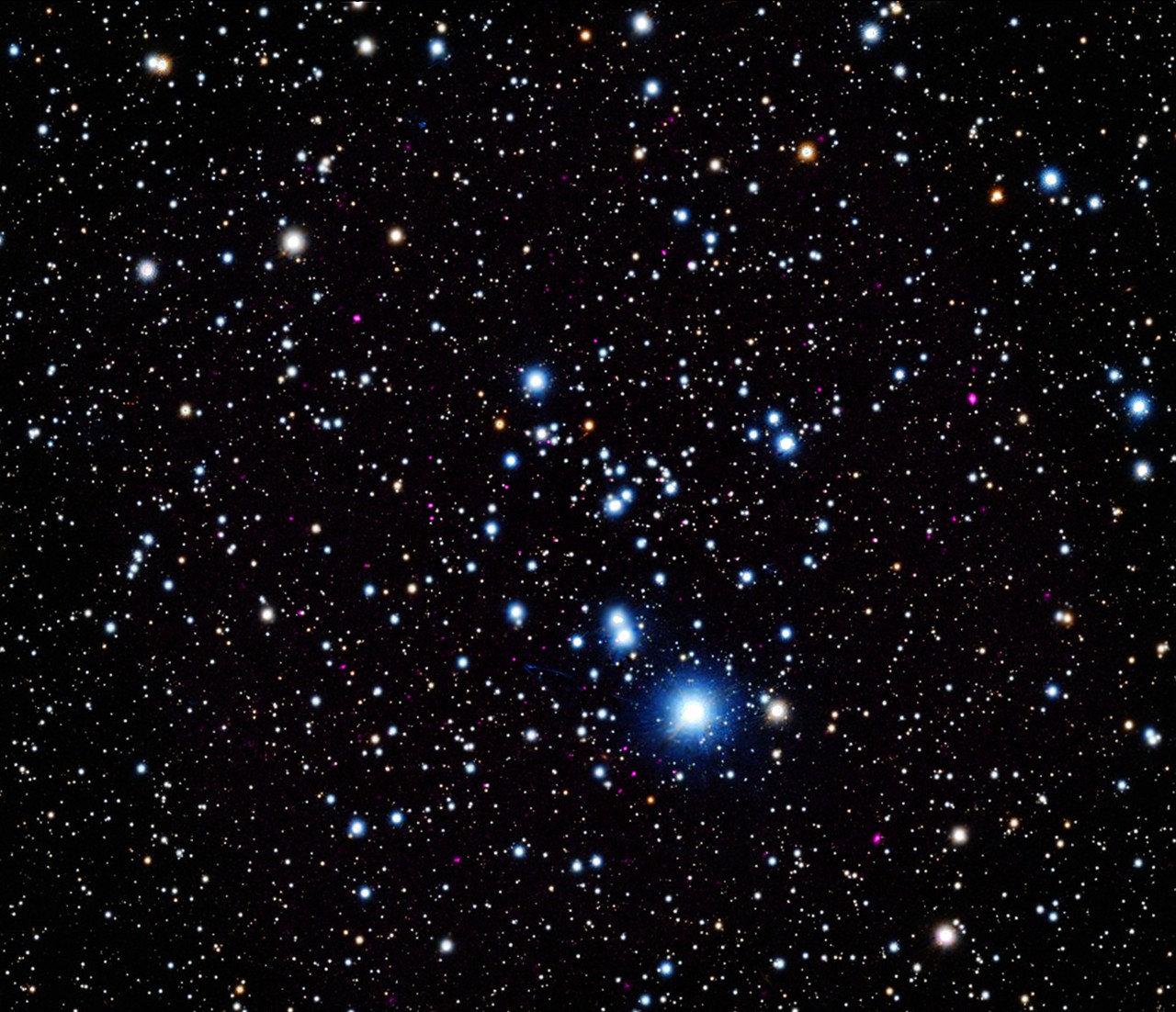
The recent study focused on eight clusters of stars aged between 45 million and 750 million years. Researchers found that Sun-like stars within these clusters emitted only about 25% to 33% of the expected X-ray output. This unexpected reduction in radiation could have positive implications for life on orbiting exoplanets.
The Mechanism Behind Dimming Stars
Konstantin Getman, lead author from Penn State University, explained that this natural dimming is not due to external forces consuming stellar energy but rather a decrease in the efficiency of magnetic field generation within these stars. As these young stars age, their magnetic fields become less effective, leading to a significant reduction in X-ray emissions.
This phenomenon may be crucial for the development of life on planets around these younger stars. For instance, three-million-year-old stars with solar mass produce approximately a thousand times more X-rays than today’s Sun. Similarly, 100-million-year-old solar-mass stars emit about 40 times more X-rays than our Sun currently does.
Implications for Life on Other Planets
The findings suggest that the early stages of solar systems may be more conducive to supporting life than previously thought. Co-author Vladimir Airapetian from NASA’s Goddard Space Flight Center noted that our own Sun may have gone through a similar dimming process billions of years ago, potentially aiding in the emergence of life on Earth.
The researchers observed that Sun-like stars tend to quiet down relatively quickly—within a few hundred million years—while less massive stars maintain higher levels of X-ray emissions for longer periods. This rapid dimming could mean that younger solar-type stars are better candidates for hosting planets with stable atmospheres and conditions favorable for life.
Research Methodology and Data Sources
The research team employed data from various sources, including ESA’s Gaia satellite and archival data from the ROSAT mission. By analyzing this information alongside new observations from Chandra, they identified members within star clusters rather than foreground or background stars. Their analysis revealed that X-ray output decreases far more rapidly than previously predicted models suggested during this adolescent phase of stellar evolution.
Historically, astronomers relied on sparse data and predictive models based on age and rotation rates to estimate young star X-ray emissions. However, this study indicates that actual measurements show an approximately 15-fold faster decline in X-ray output during this critical phase than earlier models had indicated.
Future Research Directions
The researchers are continuing their investigation into why young Sun-like stars exhibit such rapid dimming in their X-ray emissions. They suspect that changes in magnetic field generation processes may play a significant role in this phenomenon as these stars evolve. Further studies will aim to clarify these mechanisms and enhance understanding of stellar evolution and its implications for planetary habitability.
What This Means
This research provides valuable insights into the life cycles of young stars and their potential impact on surrounding planets. Understanding how stellar activity influences planetary atmospheres is crucial for assessing habitability beyond our solar system. As scientists continue to explore these dynamics, they may uncover more about the conditions necessary for life elsewhere in the universe.
For more information, read the original report here.