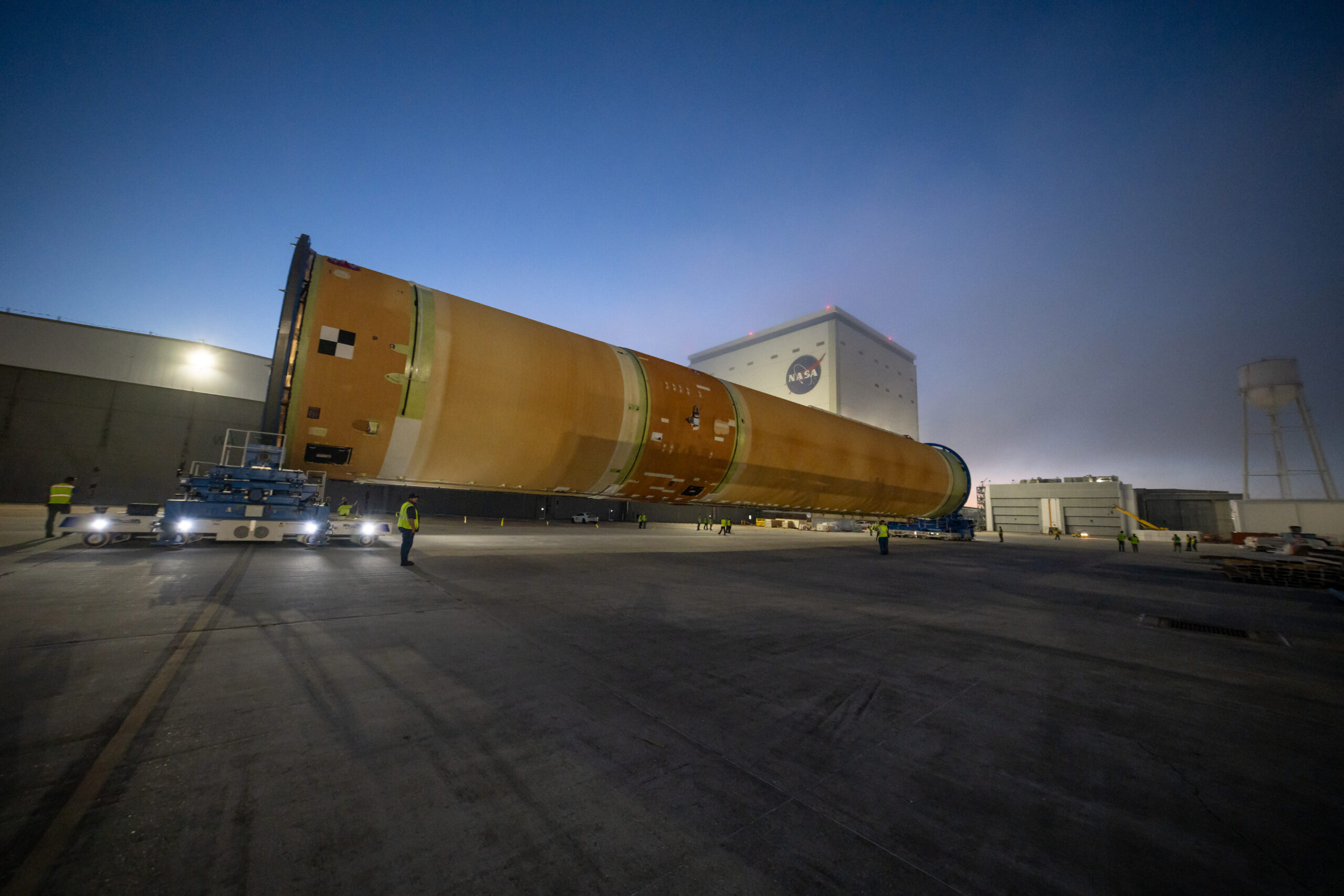
Nasa’s SLS Rocket Stage Set for Major Rollout
Nasa is preparing to roll out the largest section of its Space Launch System (SLS) rocket, which is integral to the upcoming Artemis III mission. Scheduled for April 20, 2025, this significant event will see the top four-fifths of the SLS core stage—housing critical components such as the liquid hydrogen and oxygen tanks—loaded onto the Pegasus barge for transport to Kennedy Space Center in Florida.
Event Details and Media Access
The rollout event will provide media representatives with a unique opportunity to capture images and videos of this crucial phase in the Artemis program. Attendees will hear from agency officials and industry leaders while also having the chance to engage with NASA subject matter experts and partners involved in the Artemis initiative. U.S. media interested in attending must apply by April 15, 2025, by contacting designated NASA personnel for credentialing.
Integration at Kennedy Space Center
Upon arrival at Kennedy Space Center, teams will undertake outfitting and vertical integration of the core stage before it is handed over to NASA’s Exploration Ground Systems Program. This program is responsible for stacking and preparing the rocket for launch. The engine section of the SLS, along with its boat-tail—which protects engines during liftoff—was previously moved to the Vehicle Assembly Building in July 2025. The four RS-25 engines, which are crucial for providing over 2 million pounds of thrust, are expected to be shipped from NASA’s Stennis Space Center no later than July 2026.
The Role of Collaboration in Production
The development and transportation of the SLS core stage exemplify a collaborative effort involving NASA, Boeing (the lead contractor), and L3Harris Technologies (responsible for the RS-25 engines). All five major structures that make up the core stage are manufactured at NASA’s Michoud Assembly Facility. By optimizing production spaces at both Michoud and Kennedy, NASA aims to streamline operations for a standardized SLS configuration that supports its Artemis missions.
Artemis III Mission Objectives
The Artemis III mission is poised to take American astronauts into Earth’s orbit aboard the Orion spacecraft atop the SLS rocket. This mission will test vital rendezvous and docking capabilities between Orion and commercial spacecraft, which are essential for future lunar landings planned for 2028. Notably, the SLS rocket is currently the only launch vehicle capable of sending both Orion and its crew along with necessary supplies to the Moon in a single mission.
As part of NASA’s broader Artemis program, Artemis III represents a significant step forward in human exploration of space. The program aims not only to enhance scientific discovery on the Moon but also to establish a sustainable human presence there while laying groundwork for future crewed missions to Mars.
What This Means
The rollout of this core stage marks an important milestone in NASA’s efforts to return humans to lunar exploration through its Artemis program. As preparations intensify for Artemis III, this mission serves as a critical component in advancing space exploration technology while fostering international collaboration in scientific endeavors beyond Earth.
For more information, read the original report here.