





















Tropical Cyclone Maila Triggers Landslides in Papua New Guinea
In April 2026, Tropical Cyclone Maila, a powerful storm that reached Category 4 strength, brought unprecedented rainfall to Papua New Guinea, particularly affecting the islands of Bougainville, New Britain, and New Ireland. Despite the region’s typically low risk for tropical cyclones due to the weak Coriolis effect near the equator, Maila’s unusual intensity and slow movement resulted in devastating landslides that claimed several lives.
Impact of Unusual Weather Patterns
Papua New Guinea is generally spared from tropical cyclones because its geographical location near the equator minimizes the Coriolis effect, which is crucial for cyclone formation. However, in April 2026, a combination of unusually warm sea surface temperatures and conducive atmospheric conditions led to the formation of Tropical Cyclone Maila. This cyclone not only approached but also lingered over East New Britain, resulting in intense rainfall and subsequent landslides.
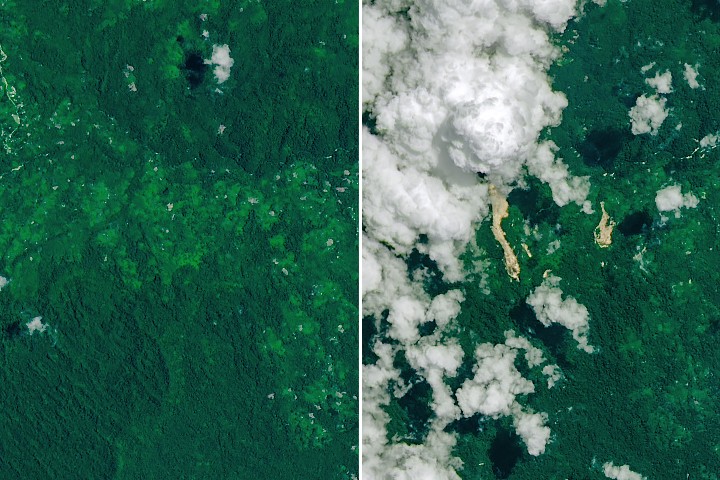
The heavy rains began saturating the steep terrain of East New Britain around April 9. Reports indicated that these conditions triggered multiple landslides, with local news sources confirming several fatalities. The Landsat 9 satellite captured images of the affected areas on April 20, revealing fresh scars on the landscape where landslides had occurred. These scars contrasted sharply with the lush greenery typical of Papua New Guinea’s forests.
Satellite Observations and Rainfall Estimates
The Landsat 9 imagery provided critical insights into the extent of the damage caused by Tropical Cyclone Maila. The satellite images depicted light-brown swaths of exposed soil and debris cutting through dense tropical forests in the Baining Mountains. A comparison image from September 2025 showed a stark difference before the landslides occurred.
NASA’s Global Precipitation Measurement (GPM) mission played a vital role in assessing rainfall during this catastrophic event. Satellite-based precipitation estimates suggested that hundreds of millimeters of rain fell across East New Britain within a week. This substantial rainfall was instrumental in destabilizing slopes and triggering landslides.
Landslide Risk Assessment
Nasa’s Landslide Hazard Assessment for Situational Awareness (LHASA) model was utilized to analyze data from GPM alongside information about slope stability, soil characteristics, and land cover. The model identified heightened risks for slope failures in East New Britain during the cyclone’s peak intensity. Areas within the Baining Mountains were highlighted as particularly vulnerable to landslides due to their steep terrain and saturated soils.
The combination of heavy rainfall from Tropical Cyclone Maila and existing geological conditions created an environment ripe for disaster. As a result, local authorities faced significant challenges in responding to the aftermath of these landslides while managing ongoing risks associated with potential further geological instability.
Community Response and Recovery Efforts
The aftermath of Tropical Cyclone Maila has prompted an outpouring of support from both local communities and international organizations. Emergency response teams have been deployed to assist with recovery efforts in East New Britain, focusing on search and rescue operations for those affected by landslides. Local media reported that at least ten lives were lost due to these disasters, highlighting the urgent need for effective disaster management strategies in regions prone to such extreme weather events.
The United States government extended condolences to Papua New Guinea’s people and government following this tragedy, emphasizing solidarity during challenging times. As recovery efforts continue, there are calls for improved infrastructure and preparedness measures to mitigate future risks associated with climate change-induced weather anomalies.
What This Means
The events surrounding Tropical Cyclone Maila underscore the increasing unpredictability of weather patterns due to climate change. Regions like Papua New Guinea that have historically experienced low cyclone activity may need to reevaluate their disaster preparedness strategies as warmer sea temperatures contribute to more intense storms. Enhanced monitoring systems using satellite technology can provide critical data for early warning systems aimed at minimizing loss of life and property damage during such extreme weather events.
For more information, read the original report here.