
























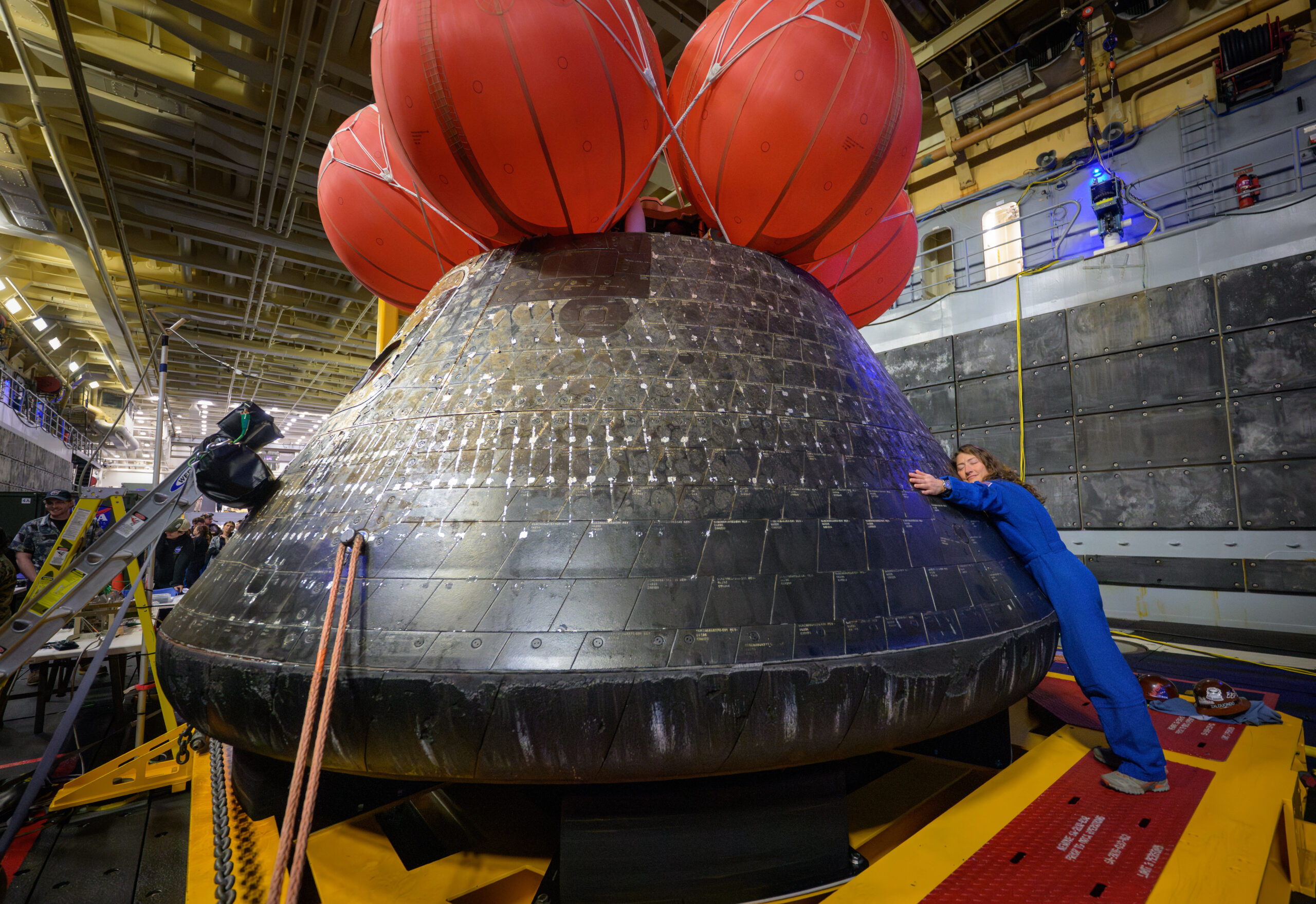
NASA’s Artemis II Astronauts Successfully Return from Historic Mission
NASA’s Artemis II mission has marked a significant milestone in space exploration with the successful splashdown of its crew on April 10, 2026. Astronauts Christina Koch, Reid Wiseman, Victor Glover, and Canadian Space Agency astronaut Jeremy Hansen returned to Earth after a groundbreaking test flight aimed at paving the way for future lunar and Martian missions.
Details of the Splashdown
The crew of Artemis II splashed down in the Pacific Ocean off the coast of California, where they were greeted by a coordinated team from NASA and the U.S. military. This team played a crucial role in ensuring the astronauts’ safe extraction from the Orion spacecraft, which had been their home during the mission. Following their recovery from the ocean, the astronauts were transported via helicopter to the USS John P. Murtha for initial medical evaluations.
The successful recovery operation was a testament to years of preparation and collaboration between various agencies and military units. The astronauts underwent thorough medical checkouts to assess their health after spending time in space, an essential step before their return to NASA’s Johnson Space Center in Houston.
Significance of Artemis II
Artemis II is particularly noteworthy as it serves as the first crewed mission within NASA’s Artemis program. This mission is designed not only to test critical systems but also to gather invaluable data that will influence future lunar landings and missions aimed at Mars. The lessons learned during this flight are expected to enhance safety protocols and operational procedures for upcoming missions.
The Artemis program aims to establish a sustainable human presence on the Moon by 2028, with an eye toward future exploration of Mars. The insights gained from Artemis II will be instrumental in refining technologies and strategies necessary for long-duration space travel.
A Look Ahead: Upcoming Missions
The success of Artemis II sets a promising precedent for subsequent missions within the Artemis framework. Future missions are planned to build upon this foundation, with NASA aiming to land astronauts on the lunar surface by 2025 through Artemis III. These missions will focus on scientific research and exploration while testing new technologies that could be utilized for Mars exploration.
- Artemis III: Planned for 2025, this mission aims to land astronauts on the Moon’s South Pole.
- Artemis IV: Expected to follow with additional lunar missions that will further establish human presence on the Moon.
- Long-term goals include sending astronauts to Mars in the 2030s, leveraging experiences gained from lunar exploration.
The Team Behind Artemis II
The crew of Artemis II included seasoned astronauts who brought diverse expertise to this historic flight. Christina Koch has previously spent nearly a year aboard the International Space Station (ISS), while Reid Wiseman and Victor Glover have extensive backgrounds in piloting spacecraft. Jeremy Hansen represents Canada’s contribution to international space cooperation as part of this landmark mission.
This diverse team not only symbolizes international collaboration but also showcases NASA’s commitment to inclusivity in its astronaut corps. Each member played a vital role in ensuring mission objectives were met while demonstrating teamwork under challenging conditions.
What This Means
The successful completion of Artemis II marks a pivotal moment for NASA and humanity’s quest for deeper space exploration. By validating technologies needed for long-duration missions, this mission lays essential groundwork for future lunar expeditions and eventual manned missions to Mars. As NASA continues its ambitious agenda, lessons learned from Artemis II will guide preparations for subsequent flights, ensuring that safety and efficiency remain paramount as humanity reaches further into space.
For more information, read the original report here.