Northern Territory Wildfires: NASA Monitors Prescribed Burns
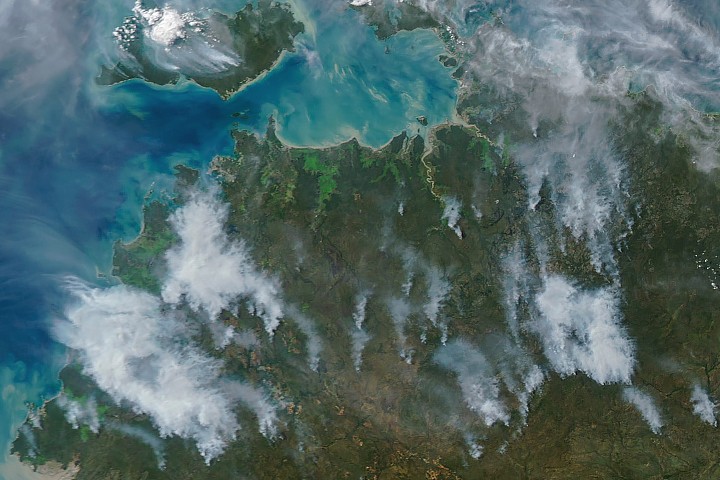
NASA satellites have been actively monitoring wildland fires in the Northern Territory of Australia, particularly in the Top End and Arnhem Land regions, during the months of May and June. On May 28, 2026, the Aqua satellite captured significant images of smoke and fire activity, highlighting the effectiveness of prescribed burning practices aimed at landscape management.
Understanding Prescribed Burns
Prescribed burns are intentionally set fires used by land managers to control vegetation and reduce fuel loads that could lead to more destructive wildfires later in the dry season. These controlled burns typically occur in the morning hours when conditions are favorable, allowing smoke to build throughout the day. The resulting smoke plumes can be extensive, as seen in satellite imagery from NASA on specific days like May 28 and June 2, 2026.
In contrast to the intense blazes that may appear later in the season, early-season prescribed burns are designed to manage fire activity in a controlled manner. This approach helps mitigate the risk of high-intensity fires that can have severe environmental impacts. The tropical savanna ecosystems of Northern Australia, characterized by fire-adapted grasses and scattered trees, benefit from this strategy as it maintains ecological balance while reducing harmful emissions.
The Role of Indigenous Practices and Modern Technology
Over recent decades, land management strategies in Northern Australia have evolved through a combination of traditional Indigenous practices and modern technology. Initiatives such as the West Arnhem Land Fire Abatement (WALFA) project and Arnhem Land Fire Abatement program exemplify this integration. These programs aim to create firebreaks and manage fuel loads effectively during the dry season, which typically spans from May to September.
The collaboration between Indigenous landowners and contemporary scientific methods has led to large-scale landscape management projects that prioritize both ecological health and community livelihoods. By employing traditional knowledge alongside satellite monitoring technologies, these initiatives seek to enhance fire management while promoting biodiversity conservation.
Effectiveness of Prescribed Burning Efforts
Recent research indicates that prescribed burning practices are achieving their intended goals. Analysis of satellite data suggests a shift in fire activity patterns from late to early dry season, resulting in a decrease in high-intensity fires and associated emissions. This transition is crucial for mitigating climate change impacts while fostering healthier ecosystems across Arnhem Land.
The ongoing efforts reflect a broader understanding of how fire can be used as a tool for environmental management rather than merely a destructive force. By strategically timing these burns, land managers can significantly alter fire dynamics within these ecosystems.
Future Implications for Fire Management
The successful implementation of prescribed burning strategies has implications beyond just immediate fire control; it represents a model for sustainable land management practices globally. As climate change continues to exacerbate wildfire risks worldwide, lessons learned from Australia’s Northern Territory could inform similar initiatives elsewhere.
What This Means
The integration of traditional Indigenous knowledge with modern technology offers a promising pathway for effective landscape management amidst changing climate conditions. As NASA continues to monitor these activities via satellite imagery, insights gained will not only aid local efforts but also contribute to global discussions on sustainable fire management practices. The ongoing success of prescribed burns highlights the potential for collaborative approaches that prioritize both environmental health and community resilience.
For more information, read the original report here.