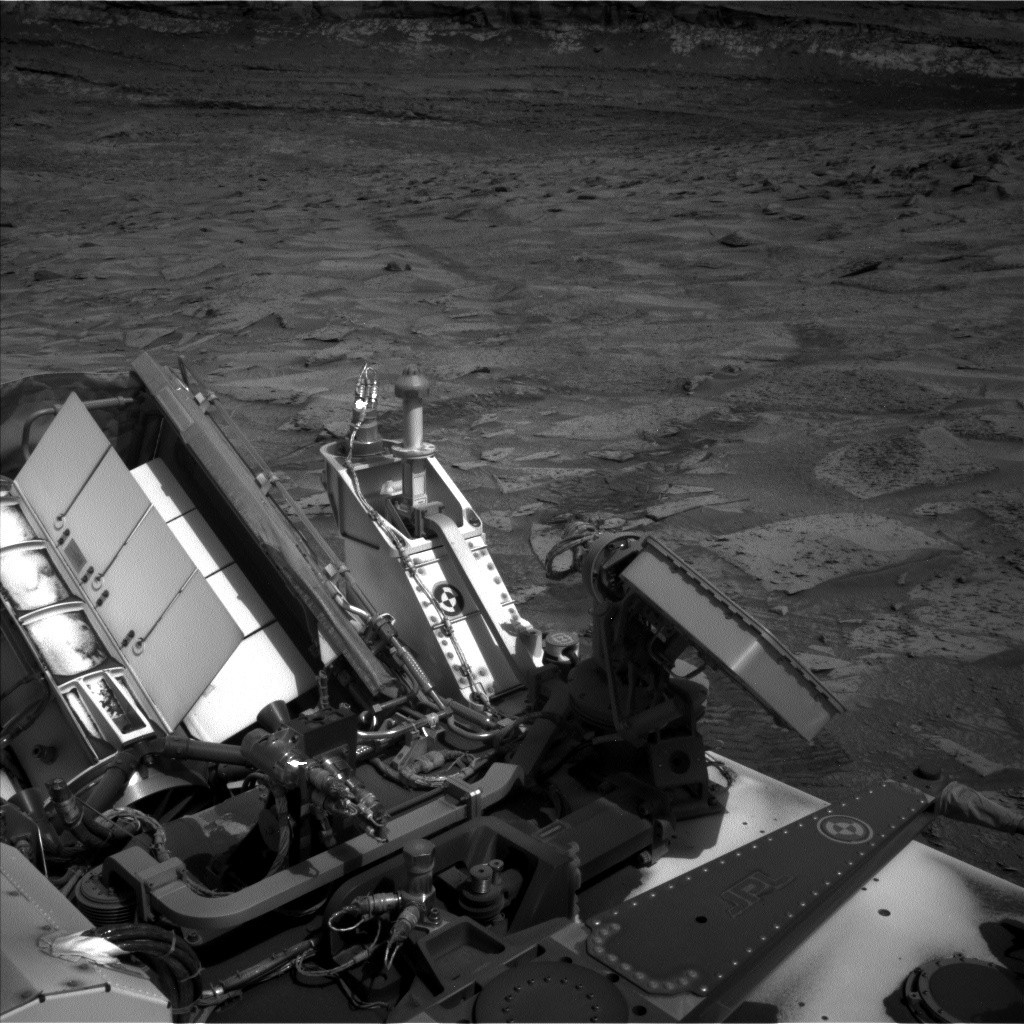
Curiosity Rover Approaches Newly Named Martian Crater Antofagasta
NASA’s Curiosity rover is making significant strides in its exploration of Mars, having recently set its sights on a newly named crater dubbed “Antofagasta.” Located in the Atacama region of Chile, this crater measures approximately 10 meters (32 feet) in diameter and is believed to be relatively young, potentially less than 50 million years old. The mission team is eager to investigate the crater, as it may provide insights into Martian geology and the presence of organic materials that could shed light on the planet’s history.
The Significance of Craters in Martian Exploration
Craters like Antofagasta serve as natural geological features that expose subsurface materials, acting as “nature’s drill.” This exposure allows scientists to study rocks and minerals that would otherwise remain buried beneath layers of sediment. The Curiosity team is particularly interested in the potential for discovering organic molecules—complex compounds that are vital for understanding the building blocks of life. Previous findings by Curiosity have included hardy organic molecules that have survived billions of years on Mars. However, the question remains: could there be more complex chemistry hidden beneath the surface near Antofagasta?
Curiosity’s Journey and Observations
As Curiosity makes its way toward Antofagasta, it has encountered a variety of intriguing geological features. The rover has driven over rocks displaying unique textures characterized by thousands of honeycomb-shaped polygons crisscrossing their surfaces. These polygon-patterned rocks are not new to Curiosity’s mission; however, their abundance in this region is striking. The team has been diligently capturing images and collecting chemical data to explore different hypotheses regarding the formation of these textures.
In addition to geological studies, Curiosity continues to monitor the Martian environment. The rover has been conducting dust-devil searches and taking images toward the horizon to better understand atmospheric conditions as Mars transitions into its warmer summer months. This environmental monitoring is crucial for preparing for future explorations and ensuring the rover’s operational integrity.
Upcoming Investigations at Antofagasta
The excitement surrounding Antofagasta lies not only in its geological significance but also in the potential discoveries awaiting closer examination. The success of this mission hinges on several factors: whether the crater is indeed large enough to have excavated deeper rocks, if it is relatively young, and if suitable drilling targets can be identified within it. The team plans to assess these variables once they obtain detailed images from Curiosity’s vantage point at the crater’s edge.
Data collected from this location is expected to arrive on Earth by Tuesday morning. If all goes according to plan, Curiosity will provide unprecedented views of both the rim and interior of Antofagasta from ground level—a first for scientists eager to analyze this unique Martian feature.
What This Means for Future Mars Exploration
The exploration of Antofagasta represents a pivotal moment in understanding Mars’ geological history and potential for past life. By examining relatively young craters like this one, scientists hope to uncover new insights into how organic materials may have formed or been preserved on Mars over millions of years. Each discovery adds another piece to the puzzle regarding Mars’ habitability and its environmental evolution.
The findings from Curiosity could inform future missions aimed at searching for signs of life or understanding planetary processes more deeply. As NASA continues its exploration efforts on Mars, each successful investigation enhances our knowledge about not just our neighboring planet but also broader questions regarding life beyond Earth.
For more information, read the original report here.