
















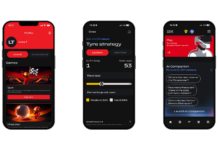






Australian aged care provider Regis has deployed an AI assistant that summarises clinical notes, flags resident concerns and sorts them by medical category — giving nursing managers a faster path through their daily paperwork and more time on the floor. The tool, called RegiCare Assist, has been in use since September 2025 and is now active across around 150 staff in Regis’ network of 72 aged care homes.
The Problem It Was Built to Solve
Clinical care managers at Regis homes start each shift by reading through progress notes and reports written by overnight carers and nurses. The volume is significant. Mariamma George, a clinical care manager at a Regis home in Cairns, described a typical 24-hour report as running to 68 pages. After uploading it to RegiCare Assist, she receives a three-page summary covering the key clinical events across the home.
For Dorkas Sangalang, a clinical care manager in Melbourne, the tool means she is fully briefed within 30 minutes of starting her shift — ready for the 9:30 a.m. team meeting where she coordinates follow-ups with registered nurses and personal care assistants. “My role is to make sure that nothing is missed,” Sangalang said.
Regis began planning its AI deployment in 2024, with leadership identifying documentation review as the most time-intensive part of a clinical manager’s day. “We realized that AI was really good at absorbing large blocks of text, picking up sentiment and picking up key themes,” said Imtiaz Bhayat, chief information officer at Regis.
How RegiCare Assist Works
RegiCare Assist was built using Microsoft Copilot Studio, a low-code platform for building AI-powered agents, and Microsoft Foundry, which provides access to large language models. Development was carried out by Regis with solutions partner Cognizant.
The assistant organises resident updates from daily progress notes into defined clinical categories including immediate concerns, clinical trends, agitation, signs of pain or infection, and bowel movements. Managers can then scan prioritised information rather than reading through unstructured reports in full.
To improve accuracy and safety, the tool uses RAG (retrieval augmented generation), which grounds the AI’s responses in a knowledge base built from Regis’ own clinical policies and procedures. The interface is click-based, with a set of approved prompts, which reduces the risk of ambiguous questions producing unreliable answers.
Prompt engineering played a significant role in the build process. Bhayat noted one early finding: including the word “all” when asking the system to summarise residents with outstanding needs was essential. Without it, some residents were dropped from the output. “Not having that word ‘all’ sometimes meant that people dropped off,” he said.
Guardrails Around Clinical Safety
Regis was deliberate about positioning the tool as support for clinical staff, not a replacement for their judgement. Rameez Hassan, chief nursing officer at Regis, said the boundaries were made explicit from the start. “We told them: This (AI) is to support you, not replace your clinical judgment or decision-making. We put those parameters clearly in place because resident safety is critical.”
Frontline managers were involved throughout the development process — both to ensure their buy-in and to validate that the system would not compromise resident safety in practice.
On data protection, the AI assistant runs within Regis’ own secure environment, with controls governing how resident information is accessed and shared. Regis selected Microsoft’s platform partly because of its security architecture and ease of use, Bhayat said.
Early Results and What Comes Next
Regis’ chief nursing officer acknowledged it is still too early to measure whether RegiCare Assist has improved clinical governance outcomes. The feedback from clinical managers using the system has been positive, with both Sangalang and George reporting lower anxiety levels and greater confidence at the start of each shift.
“We are on top of incidents and not stressing about the 24-hour report,” George said. “Now our notes are at a manageable level.”
For Sangalang, the practical difference is more time away from the screen. “Instead of focusing on paperwork, I have more time to walk the floor — and to actually sit down with residents and listen to their feedback.”
Regis has identified the next development priority: integrating RegiCare Assist directly with its existing care management system so that managers no longer need to manually upload the 24-hour report. As Bhayat put it: “The less time we spend on a computer, the more time we can spend thinking about the care of the resident, with them.”
Why It Matters
The Regis deployment illustrates what practical AI adoption looks like in a regulated, high-stakes care environment. The technology is not replacing clinical roles — it is being applied to the most paper-heavy part of a manager’s day, with human review built into every step. The specific focus on prompt engineering, privacy controls and frontline staff involvement during development reflects the kind of groundwork that tends to separate sustainable AI rollouts from those that stall at the pilot stage.
With the tool now running across 72 homes and around 150 staff, Regis is building a real-world evidence base for AI-assisted clinical administration — one that other aged care providers will likely be watching closely.