









A Glimpse of the International Space Station: Captured by NASA Astronaut Jonny Kim
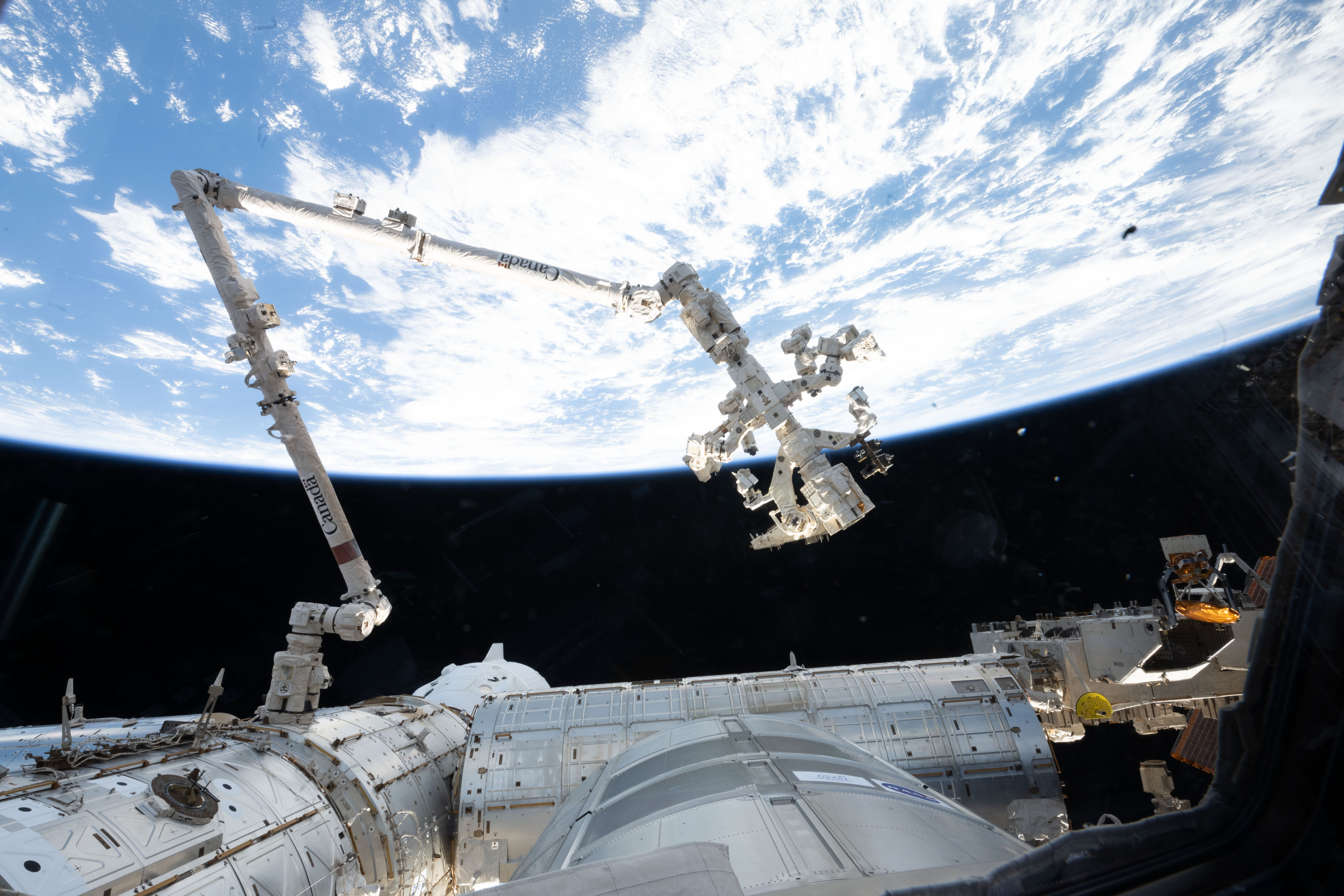
In an awe-inspiring display of human achievement and technological prowess, NASA astronaut Jonny Kim captured a stunning photograph on July 23, 2025. This image was taken as the International Space Station (ISS) made its orbit 259 miles above the Earth, soaring over a cloudy Pacific Ocean just southwest of Mexico. The photograph prominently features one of the marvels of modern engineering—the Canadarm2 robotic arm.
The Canadarm2, measuring an impressive 57.7 feet in length, is a cornerstone of the International Space Station’s functionality. It is attached to a data grapple fixture located on the ISS’s Harmony module. The image also captures Dextre, a sophisticated robotic hand attached to the arm’s latching end effector. Dextre is engineered for precision and is tasked with handling intricate external maintenance work on the station. These tools are critical to the ISS’s operations, as they help astronauts perform maintenance tasks, capture incoming spacecraft, and move supplies, equipment, and even astronauts themselves.
A Quarter Century of Human Presence in Space
On November 2, 2025, the International Space Station celebrated a significant milestone—25 years of continuous human presence in space. This achievement underscores the ISS’s vital role as a training ground and testing platform for future deep space missions. It is a pivotal element in NASA’s strategic focus on the Artemis missions, which aim to return humans to the Moon and eventually send them to Mars.
The ISS’s enduring presence in space is not just a testament to human ingenuity but also a beacon of international collaboration. Since its inception, the space station has been a collaborative project involving multiple countries and space agencies, including NASA, Roscosmos, JAXA, ESA, and CSA. This collaboration has fostered international partnerships and has been instrumental in the development of new technologies and scientific discoveries.
The Role of Canadarm2 and Dextre in Space Operations
The Canadarm2 and Dextre are quintessential examples of the technological advancements that have been achieved through international cooperation. Canadarm2 is a versatile robotic arm that is essential for numerous operations aboard the ISS. It is used to capture visiting spacecraft, move equipment, and perform crucial maintenance tasks. The arm is operated by the station crew and provides them with the capability to handle tasks that would otherwise be impossible or too risky for astronauts to perform directly.
Dextre, also known as the "Canada Hand," is a more recent addition to the ISS’s suite of tools. It is designed to perform delicate tasks that require a high degree of precision. Dextre’s ability to manipulate small components makes it invaluable for maintaining the station’s external systems. Together, Canadarm2 and Dextre enhance the ISS’s operational capabilities, allowing it to function smoothly and efficiently.
The Future of Space Exploration
As we celebrate 25 years of the ISS, it is essential to recognize its role in paving the way for the future of space exploration. The space station serves as a proving ground for technologies and techniques that will be critical for future missions to the Moon and Mars. The knowledge and experience gained from operating the ISS are invaluable assets for NASA’s Artemis program and its goal of establishing a sustainable human presence on the Moon by the end of the decade.
Moreover, the ISS continues to be a hub for scientific research. It provides a unique environment for conducting experiments that cannot be replicated on Earth. From studying the effects of microgravity on the human body to researching new materials and technologies, the ISS is at the forefront of scientific discovery.
Reflections and Reactions
The photograph taken by Jonny Kim serves as a reminder of the incredible achievements that have been made in space exploration. It not only captures the beauty of our planet from space but also highlights the technological marvels that make such exploration possible. The image has been widely shared and appreciated, sparking discussions about the importance of continued investment in space exploration and international collaboration.
As we look to the future, the lessons learned from the ISS will undoubtedly play a crucial role in shaping the next era of human spaceflight. The success of the ISS is a testament to what can be achieved when nations work together towards a common goal. It serves as an inspiration for future generations of scientists, engineers, and astronauts who will carry the torch of exploration forward.
In conclusion, the International Space Station stands as a symbol of human perseverance, ingenuity, and collaboration. As it continues to orbit our planet, it serves as a reminder of the possibilities that lie ahead and the potential for discovery that awaits us in the vast expanse of space. For more details and updates on the International Space Station, you can visit NASA’s official website.
For more Information, Refer to this article.