NVIDIA Unveils Groundbreaking Liquid-Cooled AI Infrastructure
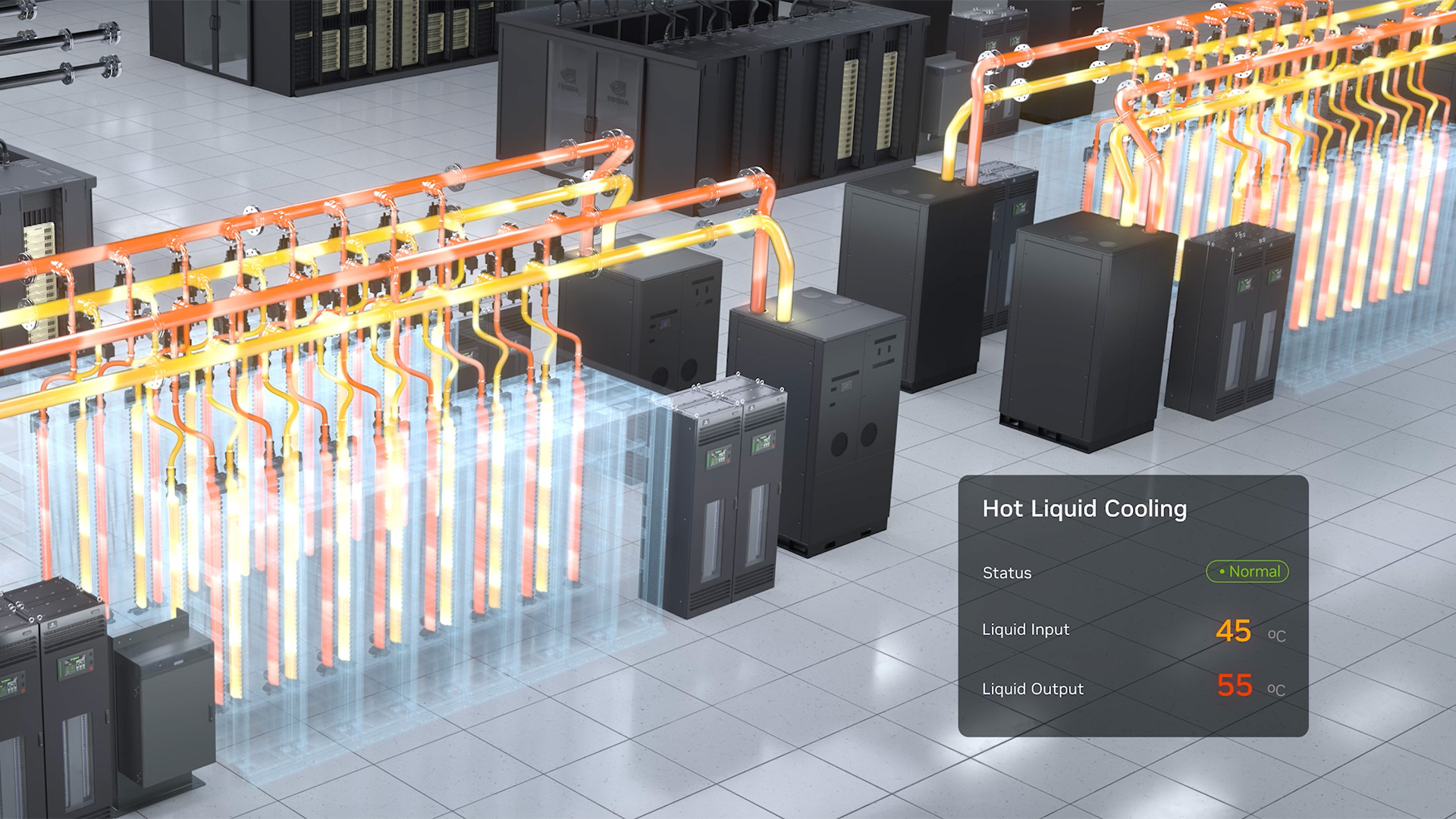
NVIDIA has introduced its latest AI infrastructure, the Rubin generation, which features a fully liquid-cooled architecture capable of operating at temperatures up to 45 degrees Celsius (113 degrees Fahrenheit). This innovative design aims to enhance energy efficiency in data centers while significantly reducing water consumption, marking a pivotal shift in how computing power is managed in hyperscale environments.
The Advantages of Full Liquid Cooling
The Rubin platform represents a significant advancement in data center technology by being the first to utilize 100% liquid cooling for all components, including chips and networking elements. This closed-loop system eliminates the need for fans, which are traditionally used in air-cooled setups. By employing liquid cooling, NVIDIA aims to improve energy efficiency dramatically, as cooling has historically accounted for up to 40% of a data center’s electricity consumption.
Ali Heydari, NVIDIA’s director of data center cooling and infrastructure, emphasized the benefits of this new design: “The NVIDIA DSX reference design for AI factories has zero water consumption — we have eliminated massive amounts of power usage and pretty much all water usage.” The system operates with minimal reliance on evaporative cooling methods, making it suitable for various climates while maintaining high performance.
Industry estimates suggest that even a minor increase in chiller plant temperatures can yield substantial savings. For instance, raising the temperature by just one degree can reduce cooling energy costs by approximately 4%. In large-scale facilities, such as those with a capacity of 50 megawatts, transitioning to liquid-cooled systems could save over $4 million annually in energy and water costs.
Transforming Cooling Norms
Traditionally, data centers have operated under the misconception that cooler environments equate to better efficiency. However, the Rubin platform challenges this notion. Silicon processors can function effectively at higher temperatures than previously thought. In fact, coolant entering at 45 degrees Celsius exits at around 55 degrees Celsius after absorbing heat from the chips without degrading performance.
This innovative approach allows for flexible ambient temperatures within data centers; warm summer air does not pose a problem since the system relies on liquid rather than air for cooling. The closed-loop liquid system recirculates coolant without consuming new water, further enhancing sustainability efforts within data centers.
A New Standard for Data Centers
The adoption of NVIDIA’s Rubin platform is expected to set a new standard among cloud providers and data center operators. Collaborations with companies like Motivair have been instrumental in developing advanced cooling solutions that align with NVIDIA’s vision. Richard Whitmore, president and CEO of Motivair, noted that as power densities increased beyond conventional limits for air cooling, liquid cooling became essential.
This transition also facilitates waste heat recovery opportunities. Residual heat generated from AI operations can be redirected to heat nearby commercial or residential buildings, creating additional energy efficiencies and promoting sustainability.
The Future of AI Factories
NVIDIA’s fully liquid-cooled servers signify a departure from hybrid models where only certain components received liquid cooling while others relied on air. The new design integrates comprehensive thermal engineering solutions that streamline how heat is managed across high-power chips using a single inlet and outlet for coolant distribution.
The result is an architecture that not only reduces noise levels—typically exceeding 85 decibels in traditional setups—but also minimizes physical space requirements. For example, systems that previously occupied six rack units can now fit into two units due to improved density and efficiency.
As demand for AI workloads continues to surge, efficient cooling solutions are critical to managing operational costs associated with running advanced computing systems. Liquid cooling at elevated temperatures provides one of the most effective strategies for balancing performance with environmental responsibility.
What This Means
NVIDIA’s advancements in liquid-cooled AI infrastructure represent a significant leap toward more sustainable and efficient data center operations. By reducing energy consumption and water usage while maintaining high-performance levels, this technology addresses critical challenges faced by modern computing environments. As more operators adopt these systems, the potential for widespread energy savings and environmental benefits will likely reshape industry standards moving forward.
For more information, read the original report here.