
























Apple Enhances App Development with New AI Frameworks and Xcode Updates
On June 8, 2026, Apple unveiled a suite of new tools and frameworks aimed at accelerating app development. The updates include advanced intelligence capabilities and enhancements to Xcode 27, which are designed to empower developers by making their applications faster, more adaptive, and easier to build. These changes reflect Apple’s ongoing commitment to providing developers with the resources necessary to innovate within its ecosystem.
New Intelligence Frameworks for Enhanced App Functionality
Apple’s latest enhancements focus on integrating artificial intelligence (AI) into app development through new intelligence frameworks. The introduction of Siri AI capabilities allows developers to make their apps more discoverable and user-friendly. Updates to the App Intents framework enable seamless connections between apps and Siri AI functionalities, such as personal context understanding and onscreen awareness, enhancing user productivity.
The new intelligence frameworks simplify the incorporation of AI features into applications. Building on last year’s Foundation Models framework, Apple now offers a unified Swift API that supports advanced on-device models capable of processing image inputs. This framework also facilitates the use of server models and custom skills, allowing developers greater flexibility in leveraging AI.
Developers enrolled in the App Store Small Business Program can access the next generation of Apple Foundation Models at no cost for cloud API usage, provided they have fewer than two million total first-time App Store downloads. This initiative aims to democratize access to powerful AI tools for smaller developers. Additionally, support for external models like Claude and Gemini enhances the versatility of app development.
The introduction of Dynamic Profiles within these frameworks enables real-time updates on how models interact with applications, allowing for adaptive AI experiences that respond to user needs. For those looking to implement custom models directly into their apps, Core AI is a newly designed framework optimized for Apple silicon’s Neural Engine, facilitating local deployment of large language models (LLMs).
Xcode 27: A Leap Forward in Development Tools
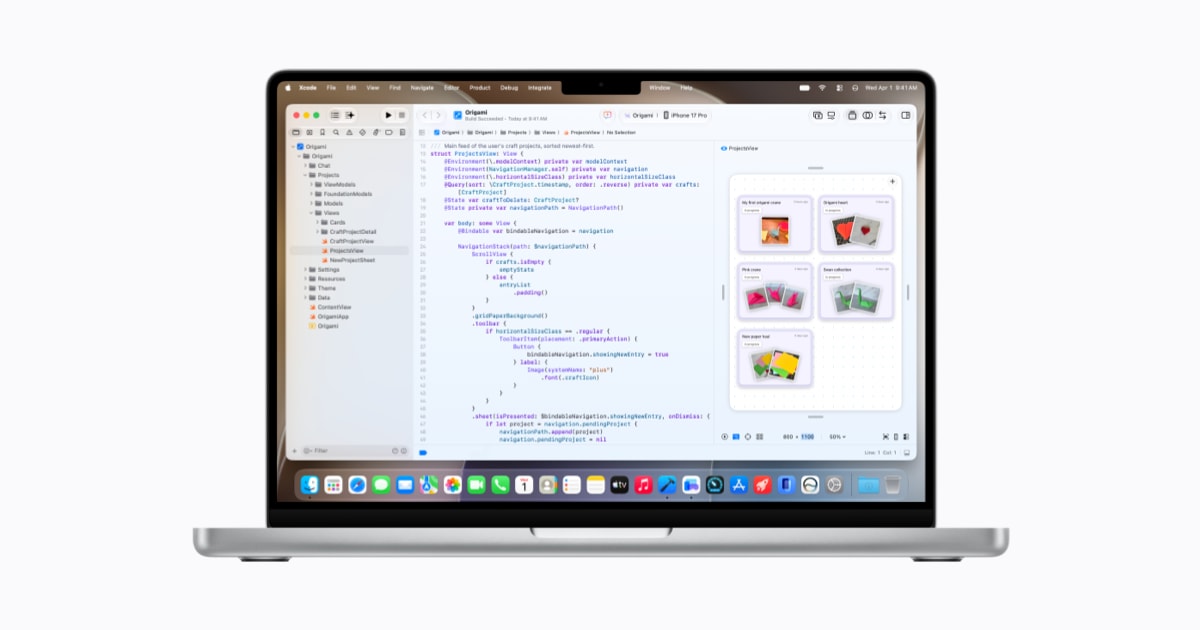
Xcode 27 represents a significant advancement in Apple’s integrated development environment (IDE). This version introduces agentic coding capabilities that allow developers to harness advanced coding agents from leading companies like Anthropic, Google, and OpenAI. These agents facilitate interactive planning and multi-turn Q&A sessions directly within the developer’s workflow.
The updated Xcode also empowers coding agents with self-validation tools, enabling them to autonomously perform tasks such as writing tests and experimenting with code in isolation using Playgrounds. The integration of a new Device Hub enhances interaction with simulators while providing a streamlined experience.
Moreover, Xcode 27 is now optimized exclusively for Apple silicon, resulting in a 30% reduction in size while improving performance. Customization options have expanded significantly; developers can personalize their toolbars and apply themes across the editor interface. The application’s cloud services have also seen improvements, with Xcode Cloud now operating up to twice as fast while supporting Metal applications and visionOS builds.
Refined Design Tools for Enhanced User Experience
This year’s design updates include Liquid Glass—a unified visual design system that enhances app expressiveness across Apple platforms. Improvements focus on legibility and customizability while adapting seamlessly to various accessibility settings chosen by users. A new transparency slider allows users to tailor their visual experience according to personal preferences.
SwiftUI continues to evolve as well, streamlining layout management and animation complexities without requiring extensive code changes from developers. New features such as reorderable containers simplify coding processes while the Spatial Preview framework enables 3D model visualization when streamed to Apple Vision Pro devices.
Swift programming language updates aim at enhancing developer efficiency by introducing features like targeted warning suppression and simplified availability attributes. Swift 6.4 is designed for full-stack development across various platforms while prioritizing usability through an intuitive syntax that aids rapid iteration.
Game Development Tools: Streamlining High-Quality Experiences
Apple has also introduced several new tools tailored specifically for game developers aiming to deliver high-quality titles across its platforms. Managed Background Assets are designed to minimize game installation sizes by intelligently delivering localized content based on player preferences.
- Steam Asset Converter: This tool simplifies the adaptation process for PC games transitioning to iOS, iPadOS, macOS, tvOS, and visionOS platforms.
- Game Porting Toolkit 4: This open-source toolkit provides best practices for Metal development specific to Apple devices while significantly reducing time-to-market for game releases.
- Official Unity Plug-ins: These plug-ins allow seamless integration of native Apple functionalities such as In-App Purchases within existing Unity workflows.
- Reality Composer Pro 3: This tool enables developers to create comprehensive spatial experiences with live previews that show immediate results during editing.
Availability of New Features
- The developer betas for iOS 27, iPadOS 27, macOS 27, watchOS 27, tvOS 27, visionOS 27, and Xcode 27 are available starting today at developer.apple.com.
- The new Apple Intelligence features will be accessible only in supported regions.
What This Means
The introduction of these advanced tools and frameworks positions Apple as a leader in fostering innovation within its developer community. By streamlining app development processes through enhanced AI capabilities and improved IDE functionality, Apple not only boosts productivity but also encourages creativity among developers. As these tools become widely adopted, users can expect more sophisticated applications that leverage cutting-edge technology tailored specifically for Apple’s ecosystem.
For more information, read the original report here.