
















NASA Approves Satellogic’s NewSat Data for Scientific Use
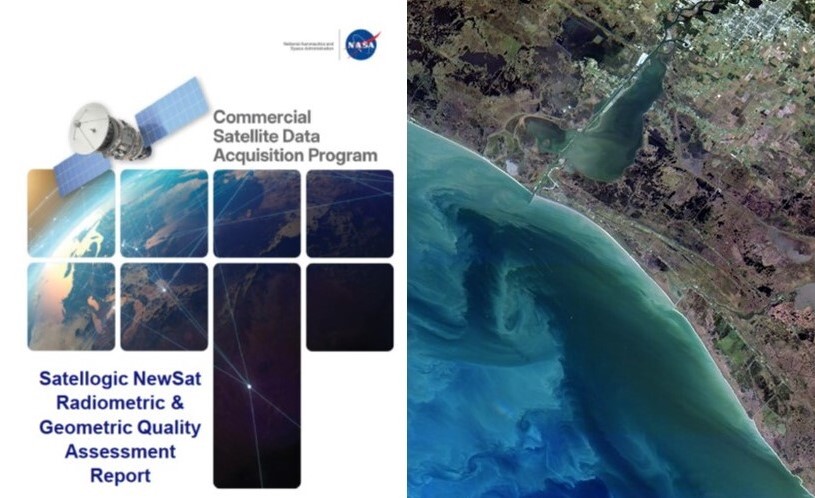
NASA’s Commercial Satellite Data Acquisition (CSDA) program has officially approved the data from Satellogic’s NewSat constellation, which includes the advanced Mark IV and Mark V sensor generations, for scientific applications. This decision was documented in a quality assessment report issued on March 9, 2026, highlighting the constellation’s radiometric and geometric data performance.
Quality Assessment Report Findings
The CSDA’s Satellogic NewSat Radiometric & Geometric Quality Assessment Report details the rigorous evaluation conducted by NASA subject matter experts (SMEs). These experts analyzed 60 top-of-atmosphere reflectance images collected from 2021 to 2025, focusing on both radiometric (related to the measurement of light intensity) and geometric (related to spatial accuracy) performance across various locations.
The analysis revealed that the NewSat constellation exhibited strong radiometric accuracy. Most spectral bands performed within 10% of reference values provided by Aqua MODIS (Moderate Resolution Imaging Spectroradiometer), a well-established satellite sensor. Furthermore, more than half of the bands achieved signal-to-noise ratios that met “Good” rating criteria. In terms of geometric performance, the sensors exceeded their specified spatial response specifications. Notably, while the Mark IV sensor received an “Excellent” grade for spatial response, the Mark V sensor was rated as “Basic,” indicating some variability in performance between the two generations.
Response to Assessment Findings
In light of the assessment results, Satellogic has initiated changes to its data processing protocols. These adjustments aim to address specific findings and recommendations outlined in the report. The CSDA is currently engaged in a quality assessment of these revised products and plans to release further findings in due course.
The Role of NASA’s CSDA Program
Nasa established the CSDA program under its Earth Science Division (ESD) to identify and acquire commercial remote sensing data that can enhance Earth science research and applications. The program facilitates structured opportunities for emerging commercial satellite data vendors, allowing NASA to integrate innovative data sources as they become available in the private sector.
Through partnerships with commercial entities, NASA’s ESD aims to accelerate scientific discovery and broaden the applications of Earth observation data for both research purposes and societal benefits. Since its inception, the CSDA program has conducted three on-ramp activities that have successfully added several vendors into its sustainment portfolio.
The program has also streamlined its evaluation process by introducing high-quality assessments led by SMEs. This approach not only accelerates reviews but also strengthens NASA’s engagement with a rapidly growing commercial data ecosystem. Key evaluation criteria include:
- Accessibility of data
- Completeness and accuracy of metadata
- User support services provided by commercial entities
- Usefulness of submitted data for scientific applications
This structured evaluation ensures that NASA gains timely access to high-quality, mission-relevant commercial data while providing valuable feedback to private-sector providers. This collaborative approach fosters innovation, enhances data products, and aligns industry capabilities with NASA’s evolving scientific needs.
Accessing Further Information
What This Means for Future Research
The approval of Satellogic’s NewSat data marks a significant step forward in enhancing NASA’s Earth science capabilities through commercial partnerships. By integrating high-quality satellite imagery into its research framework, NASA can advance its understanding of Earth’s systems while also supporting broader scientific initiatives. This collaboration exemplifies how public-private partnerships can drive innovation and improve access to critical environmental data.
For more information, read the original report here.