






























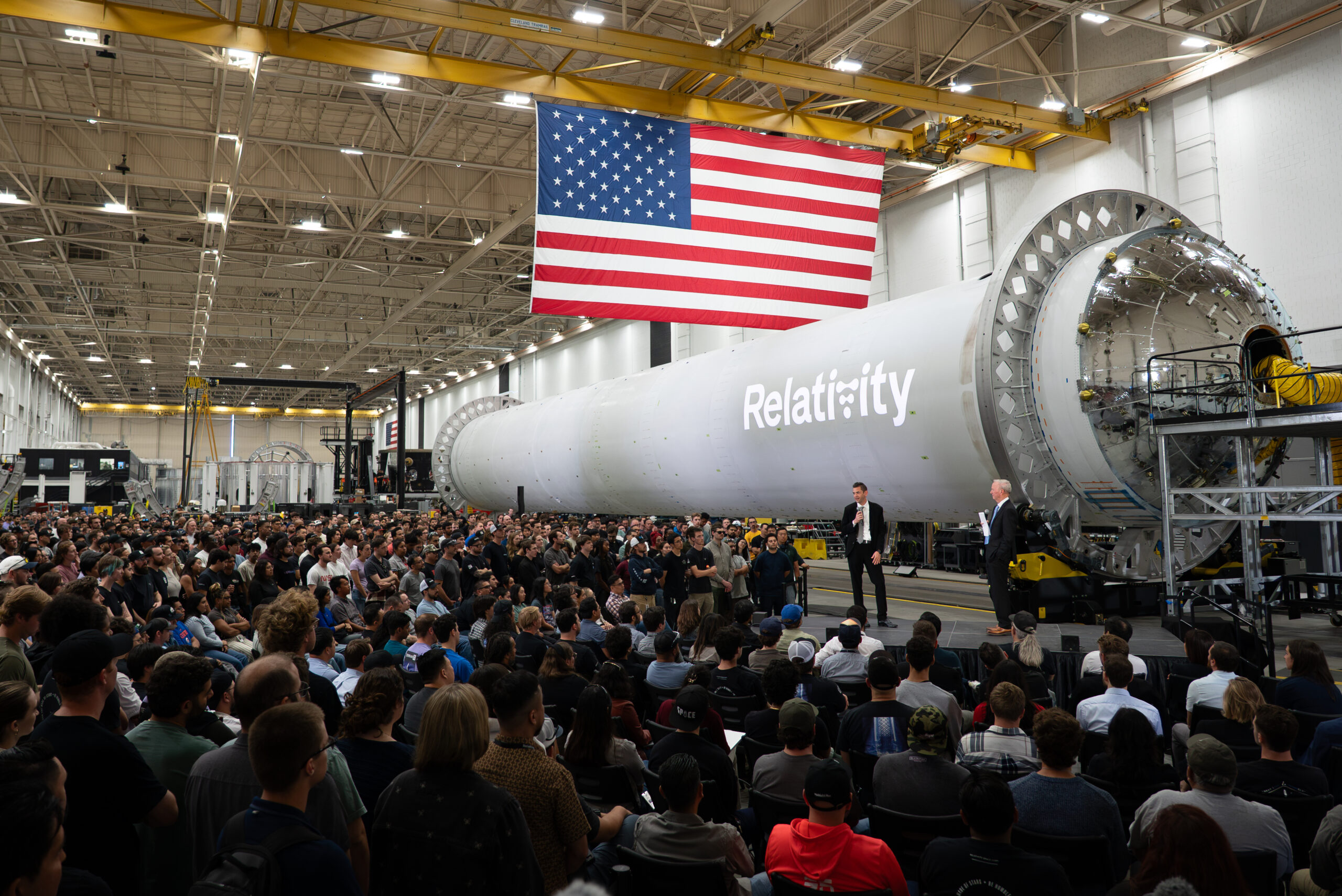
NASA Partners with Relativity Space to Enhance Mars Science
NASA has announced a new public-private partnership with Relativity Space aimed at advancing Mars science through innovative collaboration. This initiative, revealed on Wednesday, will see NASA provide the Aeolus atmospheric-science instrument payload suite, while Relativity Space will supply the spacecraft and rocket necessary for delivering these instruments to Mars. The mission is set to launch in 2028 and aims to enhance understanding of the Martian atmosphere, paving the way for future human exploration.
Objectives of the Partnership
This collaboration underscores NASA’s commitment to leveraging commercial innovation to accelerate scientific discovery. By combining NASA’s expertise with Relativity Space’s capabilities, the partnership aims to increase the frequency of data collection related to Mars. This data is crucial for ensuring safe navigation through the Martian atmosphere and ultimately facilitating human landings on the planet.
NASA Administrator Jared Isaacman emphasized the importance of such public-private partnerships, stating, “By pairing NASA’s world-class instruments with commercial innovation and investment, we can deliver more science, more often, and reduce the time it takes to get essential data into the hands of researchers preparing for future human missions to Mars.”
The Aeolus Instrument Suite
The Aeolus payload suite is designed to provide an integrated daily view of Martian winds, temperatures, dust, and clouds. It consists of four complementary instruments that will enhance models for atmospheric behavior on Mars:
- Doppler Wind and Temperature Sounder (DWTS-Ozone): Measures wind and temperature profiles from the surface up to approximately 37 miles (60 km). Developed in collaboration with GATS.
- Thermal Limb Sounder (TLS): Provides vertical temperature profiles and observations of dust and water-ice clouds. This instrument is a collaboration with Xiomas Technologies.
- Surface Radiometric Sensor Package (SuRSeP): Measures surface energy balance along with dust and cloud properties.
- Wide-Field Context Camera (WFCC): Captures daily global images of atmospheric activity on Mars.
The integration of these instruments aims to generate detailed environmental knowledge that will reduce risks associated with future crewed and uncrewed landings on Mars. By improving models for dust, winds, temperature, and seasonal atmospheric behavior, Aeolus will directly inform entry, descent, and landing systems critical for mission planning.
Development and Operations
The development of Aeolus will take place at NASA’s Ames Research Center in California’s Silicon Valley. The center is responsible for designing, building, and integrating the payload while Relativity Space oversees spacecraft development and mission operations. Dr. Eugene Tu, director of NASA Ames, highlighted that this partnership reflects how innovative collaboration can accelerate scientific progress while laying a stronger foundation for future missions aimed at landing humans on Mars.
Nasa plans to operate its science instruments for at least one Martian year while Relativity Space manages the spacecraft itself. Additionally, NASA will create a data-processing pipeline that transforms raw measurements into high-quality data products suitable for broad scientific use.
A Sustainable Framework for Collaboration
This partnership operates under NASA’s first six-year reimbursable Space Act Agreement. This agreement establishes a stable framework for sustained collaboration between NASA and Relativity Space—ensuring predictable development timelines and mission continuity as they work together towards shared goals in Martian exploration.
What This Means for Future Exploration
The partnership between NASA and Relativity Space represents a significant step forward in enhancing our understanding of Mars. By utilizing commercial capabilities alongside government resources, this initiative not only aims to gather vital atmospheric data but also sets a precedent for future collaborations in space exploration. As scientists prepare for eventual human missions to Mars, initiatives like Aeolus are essential in ensuring safety and success on this ambitious frontier.
For more information, read the original report here.







