













![[Video] Inside a Seamless Luxury Stay at The Apurva Kempinski Bali With Samsung Hospitality TVs](https://www.hawkdive.com/media/samsung-tvs-and-displays-hbu8000-lynk-cloud-hospitality-tvs-the-apurva-kempinski-bali_thumb932f-218x150.jpg "Experience Luxury at The Apurva Kempinski Bali with Samsung Hospitality TVs")






Taiwan’s Agricultural Landscape: A Closer Look at Yunlin County
With a population of approximately 23 million, Taiwan is a small island nation that plays a significant role in global agriculture, generating around $18 billion annually in agricultural products. Despite its limited land area, Taiwan’s farming practices and crop diversity are noteworthy, particularly in regions like Yunlin County, which stands out as one of the island’s agricultural powerhouses.
The Size and Structure of Taiwanese Farms
The average farm size in Taiwan is less than 1 hectare, a stark contrast to the much larger farms found in countries like the United Kingdom and the United States, where average sizes are 87 hectares and 187 hectares respectively. This small plot size can be attributed to historical land policies and cultural practices that often lead to the division of land among heirs. As a result, each Taiwanese citizen has access to only about 0.03 hectares of arable land, significantly less than their counterparts in the UK and the US.
Geographically, only about one-quarter of Taiwan’s land is classified as arable, primarily located in the southwestern region known as the Chianan Plain. This area is characterized by its flat topography and fertile soils, making it ideal for agriculture despite the mountainous terrain that dominates much of the island.
A Deep Dive into Yunlin County
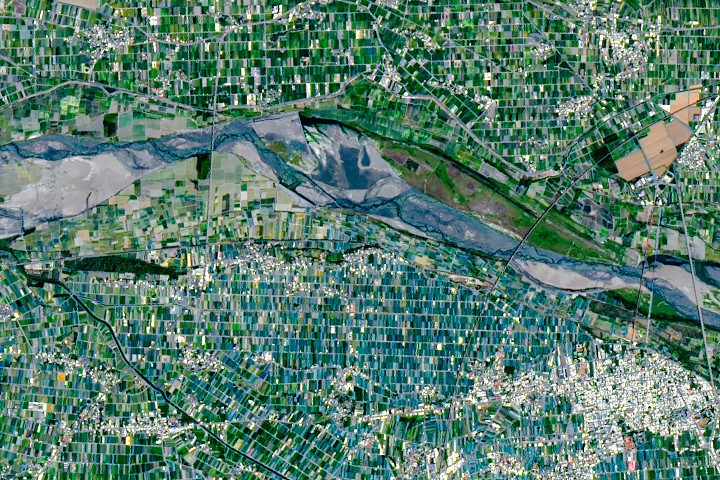
Yunlin County is situated along the floodplains of the Zhoushui and Beigang rivers and is recognized for its productive agricultural output. The region produces a variety of crops including rice, sweet potatoes, peanuts, corn, sugarcane, garlic, scallions, coffee, fruit trees, and leafy greens. Additionally, it boasts the highest pig farming numbers on the island.
The layout of farms in Yunlin County typically consists of small rectangular plots separated by roadways and irrigation canals. This design not only maximizes space but also facilitates efficient water management—an essential factor given Taiwan’s climate variability. Historically significant sugarcane plantations established during Japanese rule have left a lasting impact on farming practices; many fields still reflect this legacy with larger plot sizes compared to other crops.
The Legacy of Sugarcane Farming
Although sugarcane cultivation has declined over recent decades due to changing agricultural trends, Taiwan Sugar Corporation continues to operate in Yunlin County. The company maintains an active railway system that transports harvested sugarcane to Huwei for processing at one of the few remaining sugar refineries on the island. This infrastructure is a remnant of a once-extensive network that supported numerous sugar refineries across Taiwan.
The historical significance of sugarcane farming in Yunlin is evident when examining satellite imagery; large fields north of Baozhong still bear witness to this past. While many farmers have transitioned to more diverse crop production methods over time, sugarcane remains an important aspect of Yunlin’s agricultural identity.
Innovative Farming Techniques
In addition to traditional farming methods, modern techniques are being employed to enhance productivity in Yunlin County. One notable innovation involves the use of shade nets which provide protection from extreme weather conditions such as intense sunlight or heavy rains. These nets are particularly beneficial for specialty crops like vegetables and flowers grown around Xiluo Township. The distinctive greenish-blue hue observed in satellite images from this area can be attributed to these protective coverings.
This approach not only safeguards crops but also improves yields by creating optimal growing conditions. In contrast to regions dominated by rice cultivation—which typically appear darker green—areas utilizing shade nets showcase a vibrant mosaic that highlights Taiwan’s agricultural diversity.
What This Means for Taiwan’s Future
The agricultural landscape in Taiwan reflects both historical influences and modern innovations that shape its current practices. With limited arable land per capita compared to larger nations, Taiwanese farmers must continue adapting their methods to maximize output while ensuring sustainability. The ongoing evolution in farming techniques—such as using shade nets—demonstrates a commitment to improving productivity amid environmental challenges.
As Taiwan navigates its unique agricultural challenges and opportunities, regions like Yunlin County serve as critical examples of how small-scale farming can thrive through innovation and resilience. Understanding these dynamics not only sheds light on Taiwan’s food security but also offers insights into sustainable agricultural practices applicable worldwide.
For more information, read the original report here.