






























NASA Advances Lunar Base Program with New Contracts and Mission Plans
NASA has unveiled significant developments in its Lunar Base program during a recent briefing at its Washington headquarters. The agency announced new contracts for the development of crewed lunar vehicles and uncrewed lander modules aimed at establishing a sustainable human presence on the Moon. Key officials outlined timelines for upcoming missions that will lay the groundwork for future Artemis astronaut landings, particularly focusing on the lunar South Pole region.
Establishing a Lunar Presence
Jared Isaacman, NASA’s administrator, emphasized the importance of the Lunar Base as humanity’s first outpost on another celestial body. He stated, “Every mission, whether crewed or uncrewed, will be an opportunity to learn as we return to the lunar surface, build necessary infrastructure, and master the skills needed to live and work in one of the most demanding environments imaginable.” Isaacman highlighted that these missions are not only about scientific exploration but also about economic and technological advancements that could benefit life on Earth.
Upcoming Missions to Support Lunar Operations
The agency has announced three initial missions under the Lunar Base program designed to establish sustained operations:
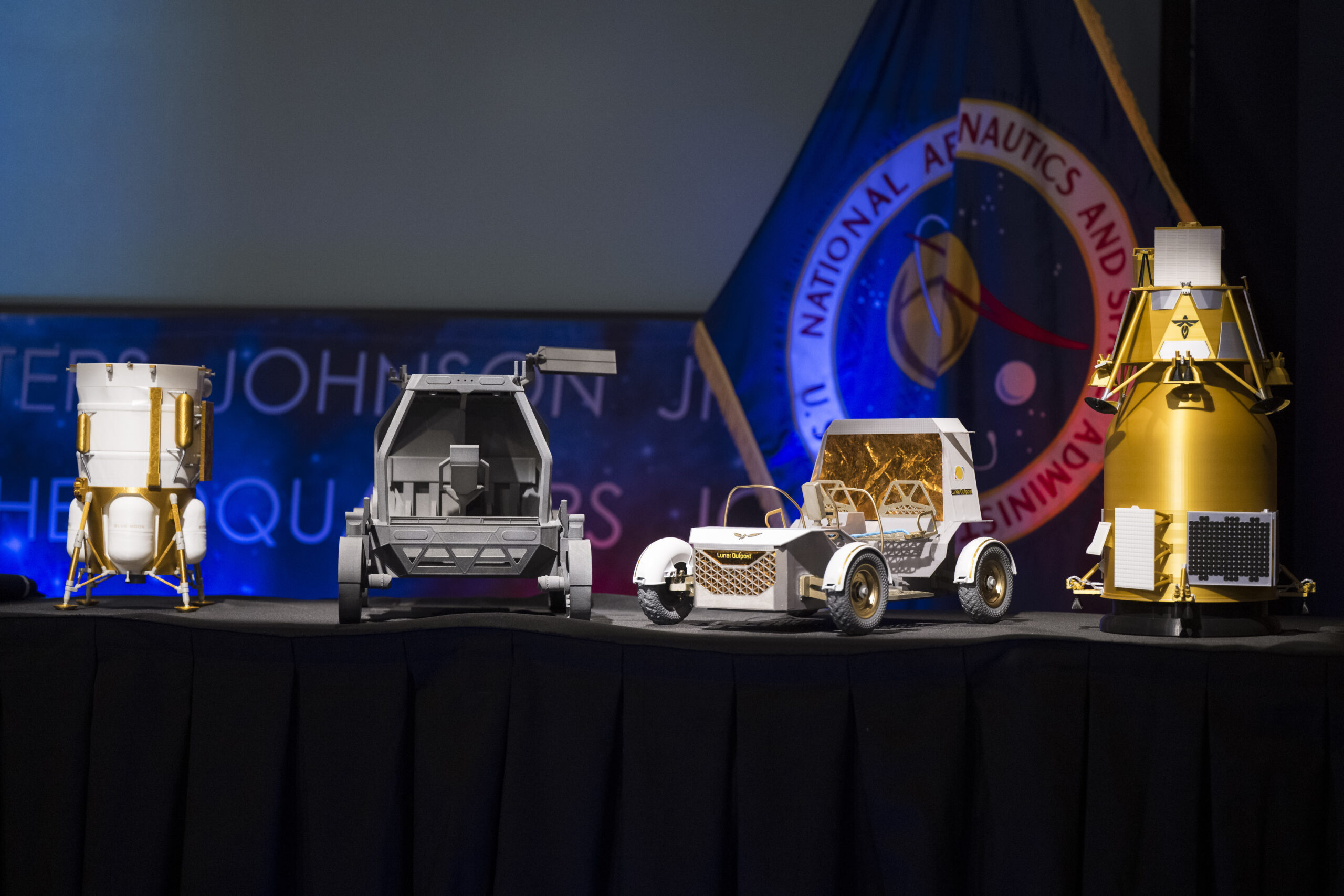
- Lunar Base I: Scheduled for launch no earlier than autumn 2026, this mission will utilize Blue Origin’s Blue Moon Mark 1 Endurance lander to transport NASA payloads. Key instruments include stereo cameras for studying lunar plumes and a laser retroreflector array that aids spacecraft in orbit to determine their location more accurately. The mission aims to land at Shackleton Connection Ridge to demonstrate capabilities that will mitigate risks ahead of future Artemis crewed landings planned for 2028.
- Lunar Base II: Set for launch later this year, this mission will carry over 500 kilograms (1,100 pounds) of cargo aboard Astrobotic’s Griffin lander. It will include Astrolab’s FLIP rover, which is designed to advance mobility systems that will inform future lunar terrain vehicle (LTV) operations.
- Lunar Base III: Also planned for this year, this mission will transport NASA’s first payload selected under its Surface Exploration Payloads and Investigations initiative. The central research project, Lunar Vertex, will study lunar swirls—light spots on the surface—to enhance understanding of surface evolution and material behavior in extreme conditions. This mission will also feature payloads from the European Space Agency (ESA) and Korea’s Astronomy and Space Science Institute, showcasing international collaboration in lunar activities.
These missions are part of more than a dozen planned throughout the year, each aimed at generating operational data and reducing risks in anticipation of Artemis crewed missions.
Contracts Awarded for Lunar Mobility
Nasa has awarded contracts worth $219 million to Astrolab and $220 million to Lunar Outpost for the construction and delivery of LTVs as part of Phase 1 of its High-Value Mission contract for Lunar Terrain Vehicle Services. These fixed-cost contracts are performance-based and are crucial for deploying both crewed and uncrewed mobility systems on the lunar surface by 2028. Initial mobility capability is essential for establishing a long-term lunar presence as outlined in national space policy priorities.
The CLV 1 vehicle from Astrolab is designed to transport astronauts and supplies while supporting remote operations. It features a compact stowage configuration weighing approximately 907 kilograms (2,000 pounds) with speeds exceeding 9.6 kilometers per hour (6 mph) on flat terrain.
Lunar Outpost’s Pegasus rover represents an evolution from their Eagle rover design, tailored specifically to meet updated NASA LTV requirements. With an operational range of up to one year and capable of manual, autonomous, or teleoperated driving at speeds over 14 km/h (9 mph), Pegasus incorporates technologies from the Apollo program while leveraging extensive prototype experience for reliable human-centered mobility essential for sustained lunar operations.
Future Developments in Lunar Exploration
The deployment of multiple LTVs during early development stages of the Lunar Base will expedite technology demonstrations, guide planning efforts, and mitigate operational risks ahead of Artemis crewed missions. This approach allows NASA to characterize terrain hazards, transport materials efficiently, position resources proactively, and mature necessary systems for long-duration lunar exploration.
Over the next eighteen months, selected providers will finalize rover designs while conducting crew evaluations and certifying flight units for operational readiness. The resulting LTVs will support autonomous movements, site preparation efforts, scientific investigations, technology demonstrations, and astronaut transportation.
As efforts progress towards establishing the Lunar Base continue, NASA plans to expand opportunities for additional suppliers through staged access competitions. This strategy aims to create a robust framework for lunar mobility while reinforcing national priorities in space capabilities.
What This Means
The recent announcements from NASA signify a substantial commitment towards creating a sustainable human presence on the Moon through innovative partnerships with private industry. As these missions unfold over the next few years, they promise not only advancements in space exploration but also potential technological benefits that could enhance life back on Earth. The groundwork being laid now is critical not just for future lunar endeavors but also as a stepping stone towards eventual manned missions to Mars.
For more information, read the original report here.







