
















NVIDIA Unveils RTX Spark Superchip at COMPUTEX
NVIDIA has introduced its latest superchip, RTX Spark, during the GTC Taipei event at COMPUTEX last week. This innovative technology aims to transform Windows PCs for the era of personal AI agents, enhancing both gaming and creative experiences. Following the announcement, NVIDIA’s founder and CEO Jensen Huang traveled to South Korea to present RTX Spark to local gamers, emphasizing its potential in the gaming community.
Powerful Performance for Gamers
RTX Spark is designed specifically for local AI applications, gaming, and content creation. It integrates three decades of NVIDIA’s technological advancements into a compact form factor suitable for slim Windows laptops and efficient desktop PCs. The superchip enables gamers to play AAA titles at 1440p resolution with frame rates exceeding 100 frames per second (FPS) while utilizing NVIDIA’s ray tracing, Deep Learning Super Sampling (DLSS), and Reflex technologies.
One of the standout features of RTX Spark is its support for NVIDIA’s latest innovations, including DLSS 4.5 Ray Reconstruction. This technology employs a second-generation transformer model to enhance image quality significantly, providing a more immersive gaming experience.
Engagement with Korea’s Gaming Community
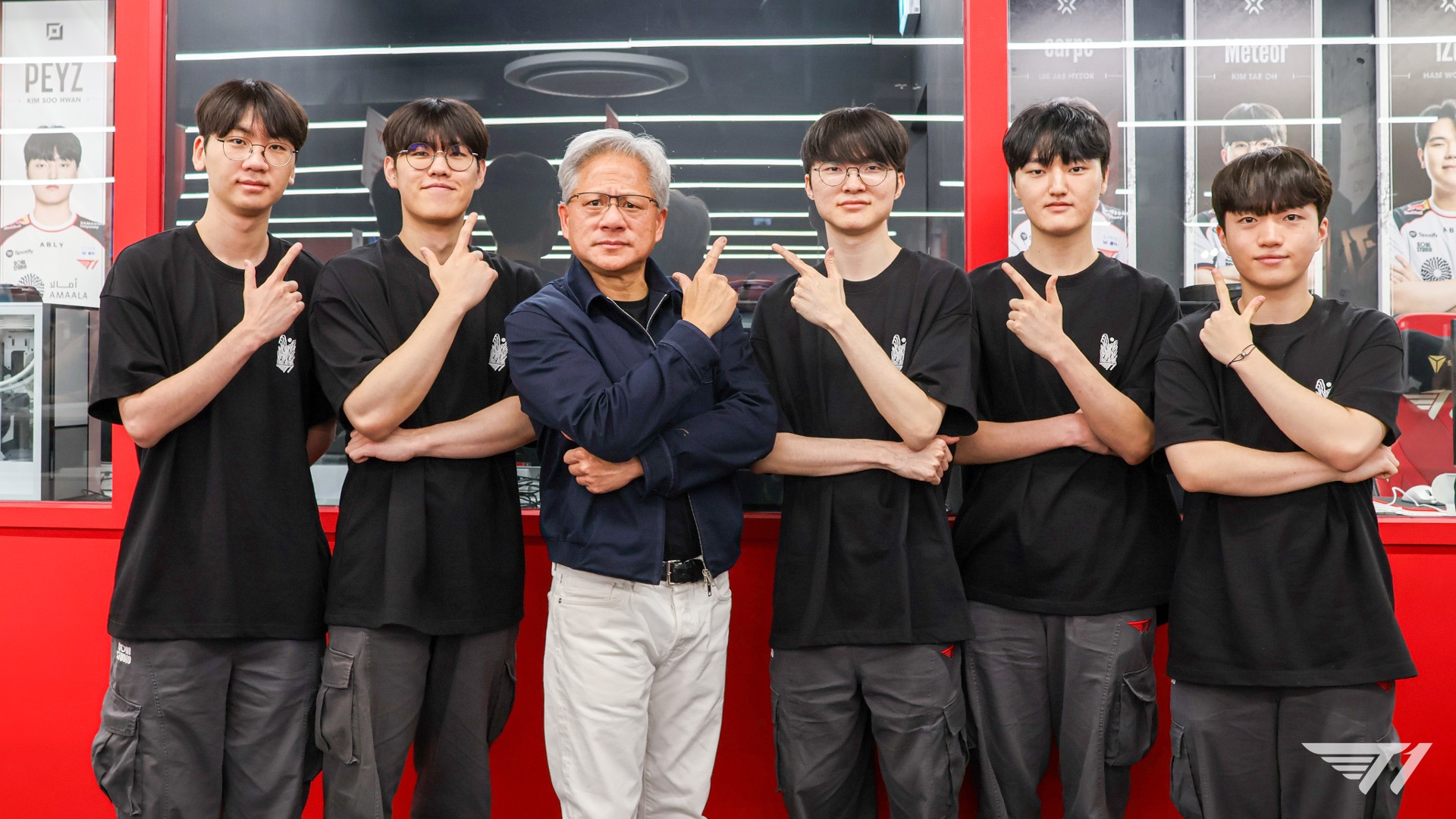
Korea has been pivotal in the rise of esports and the popularity of PC bangs—gaming cafes that have become cultural hubs. NVIDIA celebrated its long-standing relationship with the Korean gaming ecosystem by hosting a festival commemorating 25 years of GeForce in October. At this event, Huang visited T1 Base Camp, a prominent PC bang owned by T1, one of Korea’s leading esports organizations. There, he unveiled RTX Spark alongside T1’s League of Legends World Champion team, including renowned player Lee “Faker” Sang-hyeok.
The collaboration between NVIDIA and Riot Games aims to bring popular titles like League of Legends and VALORANT to RTX Spark-powered systems. During this unveiling event at T1 Base Camp, attendees had the chance to win laptops equipped with RTX Spark technology as well as exclusive merchandise signed by Huang and Faker.
Surprise Showcases in Gangnam
Huang continued his tour in Seoul’s Gangnam district, surprising gamers at various PC bangs with live demonstrations of RTX Spark alongside representatives from KRAFTON and NC. At Optimum Zone PC, Huang showcased popular titles such as PUBG: BATTLEGROUNDS and Subnautica 2 on RTX Spark systems. Gamers were treated to an exclusive opportunity to interact with PUBG Ally—an unreleased co-playable character developed using NVIDIA ACE technologies—demonstrating how AI can enhance gameplay by creating more engaging characters that act like teammates.
At another venue, Portal PC, Huang highlighted NC’s upcoming games CINDER CITY and AION 2 on RTX Spark systems. This partnership dates back to the early 2000s when NVIDIA began collaborating with NC on the Lineage franchise. The integration of RTX technology into NC’s flagship games has been crucial for delivering high-quality graphics and immersive gameplay experiences.
A Broad Ecosystem Embraces RTX Spark
The launch of RTX Spark has garnered interest from over 100 software providers and game developers across the Windows ecosystem. Notable partners include NetEase, Remedy Entertainment, and Xbox. These collaborations are expected to expand access to high-performance gaming experiences on slim laptops equipped with this new superchip.
CINDER CITY will leverage DLSS 4.5 Dynamic Multi Frame Generation and Super Resolution features upon its release later this year, allowing gamers on RTX Spark devices to enjoy cutting-edge performance in an open-world setting.
What This Means
The introduction of NVIDIA’s RTX Spark marks a significant advancement in personal computing technology aimed at enhancing gaming experiences through AI capabilities. By optimizing performance for both casual gamers and enthusiasts alike, this superchip promises to redefine how games are played on Windows PCs while fostering deeper engagement within established gaming communities like those in Korea. As game developers continue to adopt this technology, players can expect increasingly sophisticated gameplay experiences that leverage AI-driven innovations.
For more information, read the original report here.