Celebrating 25 Years of Human Presence in Space: A Look at the International Space Station’s Milestone
Since November 2000, humanity has maintained an unbroken presence in space, thanks to the collaborative efforts of NASA and its global partners. This enduring achievement is embodied by the International Space Station (ISS), which has not only become a symbol of international cooperation but also a hub of scientific discovery and innovation. Over the past quarter of a century, the ISS has welcomed over 280 astronauts from 23 different countries, showcasing its truly global nature. Moreover, the station has facilitated more than 4,000 experiments conducted by over 5,000 researchers from at least 110 countries, underscoring its role as a unique microgravity laboratory.
The ISS has not only advanced scientific research but has also spurred the development of a commercial market in low Earth orbit. This burgeoning market supports a wide range of activities, including research, technology development, and the transportation of crew and cargo. The presence of commercial spacecraft visiting the ISS is a testament to the vibrant partnership between public entities like NASA and private companies.
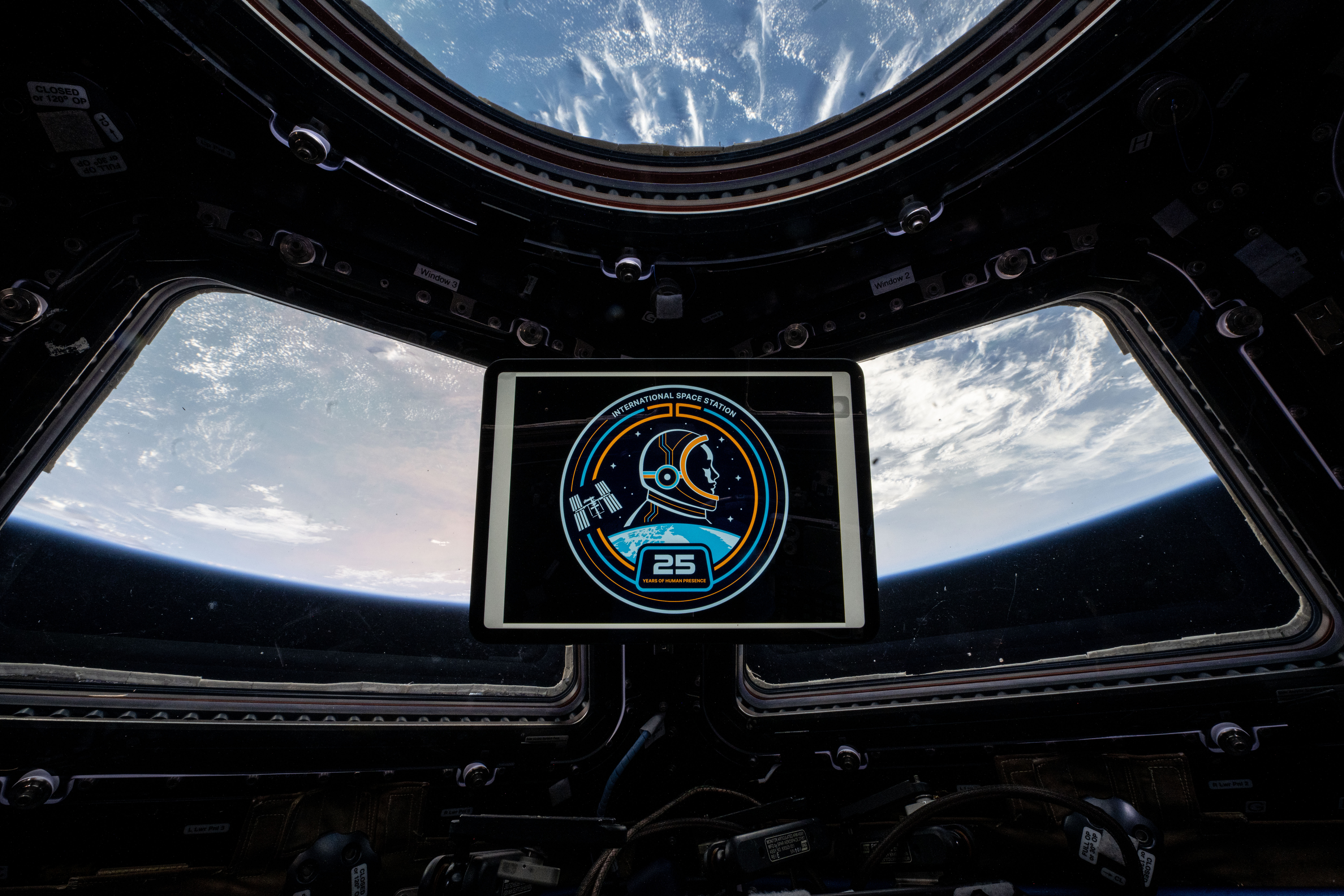
In recognition of this monumental achievement, NASA has unveiled a special logo to commemorate 25 years of continuous human presence in space. This emblem, prominently displayed in the cupola of the ISS as of July 17, 2025, features a central astronaut figure. This figure symbolizes the diverse array of astronauts who have lived and worked on the station over the years. Surrounding the astronaut are 15 stars, each representing one of the 15 partner nations that contribute to the station’s success.
The design also incorporates a depiction of the space station itself at the edge, highlighting the continuous human habitation that has occurred there for the past 25 years. The Earth is featured prominently, symbolizing the planet that the ISS orbits and serving as a reminder that the scientific endeavors conducted aboard the station aim to benefit all of humanity. Encircling the design is the number “25,” signifying the remarkable achievement of maintaining a human presence in space for a quarter of a century.
Beyond its role as a platform for scientific research and international collaboration, the ISS serves as a vital training ground for future deep space missions. It enables NASA to prepare for the Artemis missions, which aim to return humans to the Moon and eventually set the stage for human exploration of Mars. The knowledge and experience gained from the ISS are crucial in overcoming the challenges of long-duration space travel and ensuring the success of these ambitious endeavors.
For those interested in the technical aspects of space exploration, the ISS offers a plethora of learning opportunities. The station’s microgravity environment provides a unique setting for experiments that are not possible on Earth. For instance, researchers can study the effects of weightlessness on biological systems, materials science, and fluid dynamics. These experiments have led to significant advancements in various fields, including medicine and engineering, ultimately contributing to improved technologies and products on Earth.
Moreover, the ISS has become a platform for international diplomacy and collaboration. The station’s partnership model, which involves countries from around the world, serves as a blueprint for future cooperative ventures in space. This collaboration fosters a spirit of unity and shared purpose, demonstrating that when nations work together, they can achieve extraordinary things.
As we celebrate the 25th anniversary of continuous human presence in space, it is important to acknowledge the resilience and dedication of the astronauts, scientists, and engineers who have made this possible. Their efforts have not only expanded our understanding of the universe but have also paved the way for the next generation of explorers.
In conclusion, the International Space Station stands as a testament to human ingenuity and the power of international cooperation. As we look to the future, the lessons learned from the ISS will undoubtedly play a crucial role in shaping the next chapters of space exploration. Whether it’s returning to the Moon or venturing to Mars, the legacy of the ISS will continue to inspire and guide us on our journey to the stars.
For further reading and updates on the International Space Station, you can visit NASA’s official website at NASA.
For more Information, Refer to this article.