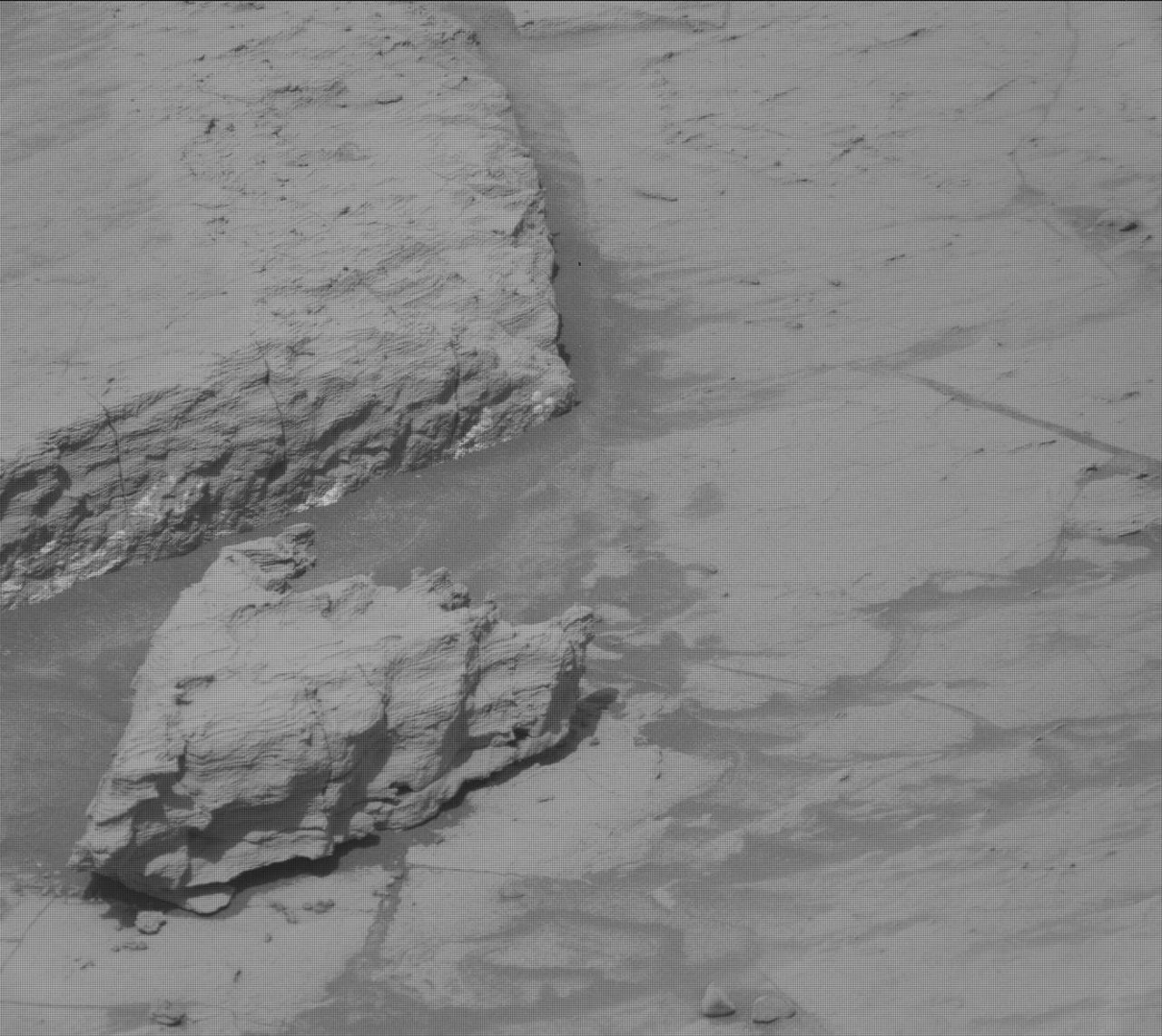
NASA’s Perseverance Rover Adapts to Data Delays on Mars
The Perseverance rover, operated by NASA, recently showcased its adaptability during a planning session for Sols 4852-4853, which took place on April 3, 2026. Faced with a delay in data transmission from Mars, the team of scientists led by Professor Susanne P. Schwenzer creatively adjusted their plans to ensure continued scientific exploration of the Martian landscape.
Creative Problem-Solving Amidst Data Delays
During the planning session, the absence of timely data required the team to think outside the box. Typically, the rover utilizes its AEGIS (Autonomous Exploration for Gathering Increased Science) capability to autonomously select targets for ChemCam LIBS (Laser-Induced Breakdown Spectroscopy) measurements after completing drives. However, this time, the team decided to integrate two AEGIS observations into their plan alongside various atmospheric and environmental assessments.
This innovative approach not only allowed for additional measurements but also fostered a dynamic atmosphere within the team. The absence of routine data created an environment that encouraged discussion and collaboration among team members. While such uncertainty can be tense, it also provides an opportunity for creativity and teamwork. The scientists expressed satisfaction in overcoming challenges and making the most out of unexpected situations.
Exciting Discoveries in Martian Terrain
When data finally arrived on Wednesday, it revealed a fascinating terrain characterized by numerous blocks with polygonal surfaces. This unique geological feature reminded Schwenzer of boulder-rich areas observed on Earth, specifically along the Gediz Vallis Channel in Turkey. The distribution and characteristics of these blocks are expected to change as Perseverance continues its traverse up Mount Sharp.
The upcoming activities planned for Sol 4855 include a “MARDI sidewalk,” where the MARDI camera will capture images while the rover is in motion. These sequences are crucial for understanding how Martian terrain evolves over time and will provide valuable insights into the planet’s geological history.
Targeted Scientific Investigations
The week’s planning involved multiple observations using ChemCam and APXS (Alpha Particle X-ray Spectrometer). ChemCam conducted three AEGIS observations and four human-directed observations targeting areas named “Las Petas,” “Punta Negra,” “Pampa del Molle,” and “Los Condores.” These investigations aimed to analyze normal-looking bedrock and various geological features to determine what materials constitute the prominent polygons observed in the landscape.
APXS also focused on four distinct targets: “Rio Espiritu Santo,” “La Escalera,” “Los Condores,” and “Tropico de Capricornio.” By examining chemical differences among these materials, scientists hope to gain insights into how these polygons formed and what environmental conditions prevailed during their creation.
The Importance of Imaging in Varied Landscapes
Imaging plays a critical role in understanding Martian landscapes like this one. The Mastcam is capturing images in multiple directions both near-field and along projected drive paths. Additionally, ChemCam is employing its Remote Micro Imager (RMI) to obtain long-distance images that reveal details about surrounding geological formations. One notable feature is a butte named “Mishe Mokwa,” which has become a favorite subject due to its complex structure as Perseverance navigates past it.
Atmospheric observations are also integral to ongoing research. The team is conducting measurements of atmospheric opacity and searching for dust devils while monitoring subsurface water using the DAN (Dynamic Albedo of Neutrons) instrument across all plans. Despite initial delays in data transmission, three comprehensive plans were executed successfully.
A Personal Reflection on Space Exploration
As Schwenzer reflects on her experiences with Mars exploration, she draws parallels with current lunar missions involving astronauts aboard NASA’s Orion capsule as they orbit the Moon. This moment evokes nostalgia for earlier missions like Apollo 8—the first crewed mission to orbit the Moon—while underscoring her excitement about witnessing contemporary space exploration efforts firsthand.
The juxtaposition of past achievements with present endeavors highlights humanity’s ongoing quest for knowledge beyond Earth’s boundaries.
What This Means
The ability of NASA’s Perseverance rover team to adapt under challenging circumstances emphasizes the importance of flexibility in scientific research. As they continue exploring Mars’ complex geology, each discovery contributes valuable information about the planet’s history and environmental conditions. Moreover, advancements in autonomous technology like AEGIS enhance mission efficiency while allowing scientists to focus on broader questions about planetary formation and evolution.
For more information, read the original report here.