Curiosity Rover Continues Its Journey on Mars, Preparing for New Scientific Campaign
The Curiosity rover is advancing toward its next major scientific campaign on Mars, with a planned Earth planning day set for June 5, 2026. The rover’s team is currently focused on exploring the yardang unit, a series of wind-sculpted hills that promise to reveal new geological insights. This transition period between campaigns allows the team to gather valuable data while navigating the Martian landscape.
Exploration Between Campaigns
Curiosity operates in two distinct modes: during defined science campaigns and in the interim periods between them. Science campaigns involve meticulous planning, where every image and workspace is choreographed to meet specific scientific objectives. In contrast, the periods between these campaigns emphasize exploration, allowing scientists to drive toward new locations while documenting interesting geological features along the way.
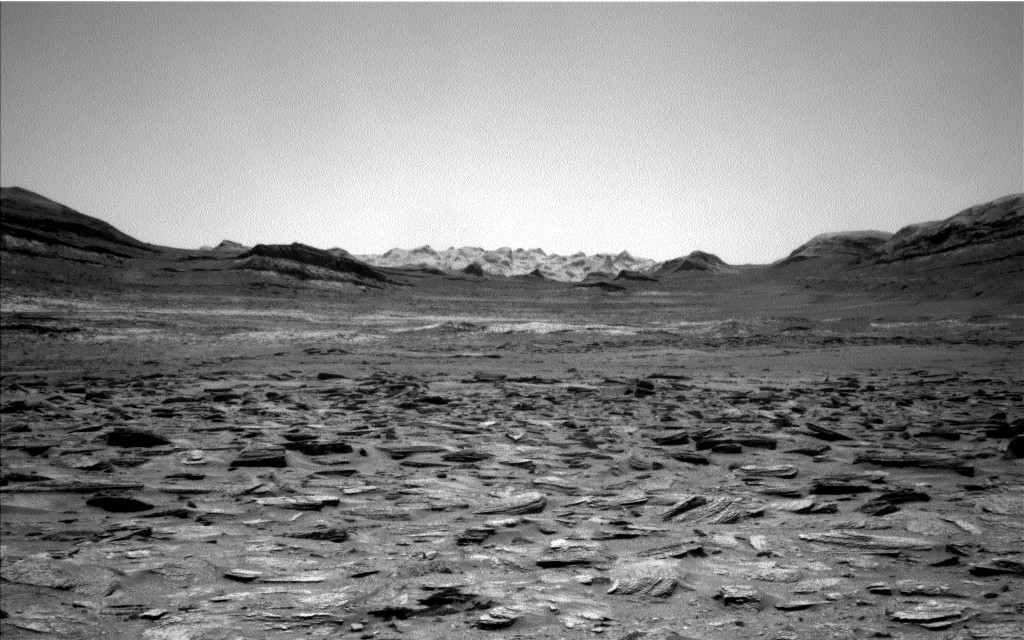
The rover is currently heading southward, traversing an area characterized by laminated bedrock that varies in color and texture. The terrain presents challenges due to rocks protruding at odd angles, complicating navigation. Recent observations have revealed dark layers interspersed with lighter rock formations, providing a rich tapestry for analysis. The Alpha Particle X-ray Spectrometer (APXS) and the Mars Hand Lens Imager (MAHLI) have been utilized to examine various rock samples, including those from notable locations like Rio Bio Bio and Placilla de Caracoles.
Scientific Instruments at Work
The Curiosity team is actively using its suite of scientific instruments to capture detailed images and analyze geological features. The Mastcam and ChemCam Long Distance Remote Micro Imager (LD-RMI) are employed to document everything of interest in the surrounding landscape. The open terrain allows for imaging from multiple angles, enhancing the understanding of formations such as Mira Flores and Kimsa Chata.
Mira Flores stands out as a small erosional outlier visible from afar, while Kimsa Chata showcases remarkable sedimentary structures that could provide clues about Mars’ past environments—whether it was once a desert or contained bodies of water. These analyses are crucial for piecing together the planet’s geological history and understanding its potential for past life.
Environmental Monitoring Activities
The Environmental Theme Group plays a critical role in monitoring Martian conditions throughout Curiosity’s mission. Current activities include tracking dust devils within Gale Crater and assessing dust levels in the atmosphere above. Such environmental data contributes significantly to understanding how weather patterns affect both current exploration efforts and future missions.
This weekend’s planned drive will take Curiosity further into an area where the contrast between dark and light bedrock becomes more pronounced. Beyond this region lies a smooth expanse devoid of protruding rocks—an intriguing feature that invites speculation about its composition and formation processes.
Looking Ahead: The Excitement of Exploration
The journey ahead promises excitement as Curiosity continues its exploration of Mars’ diverse geological features. Each new finding adds depth to our understanding of the planet’s history and evolution. As scientists analyze data collected during this exploratory phase, they remain eager to uncover what lies beyond each horizon.
What This Means
The ongoing exploration by Curiosity highlights the importance of adaptability in planetary science missions. Transitioning between structured campaigns and exploratory phases allows scientists to maximize their findings while navigating unpredictable terrains. As Curiosity approaches new geological formations, each image captured and each sample analyzed contributes valuable knowledge about Mars’ past environments—insights that may one day inform human exploration efforts on the Red Planet.
For more information, read the original report here.