






























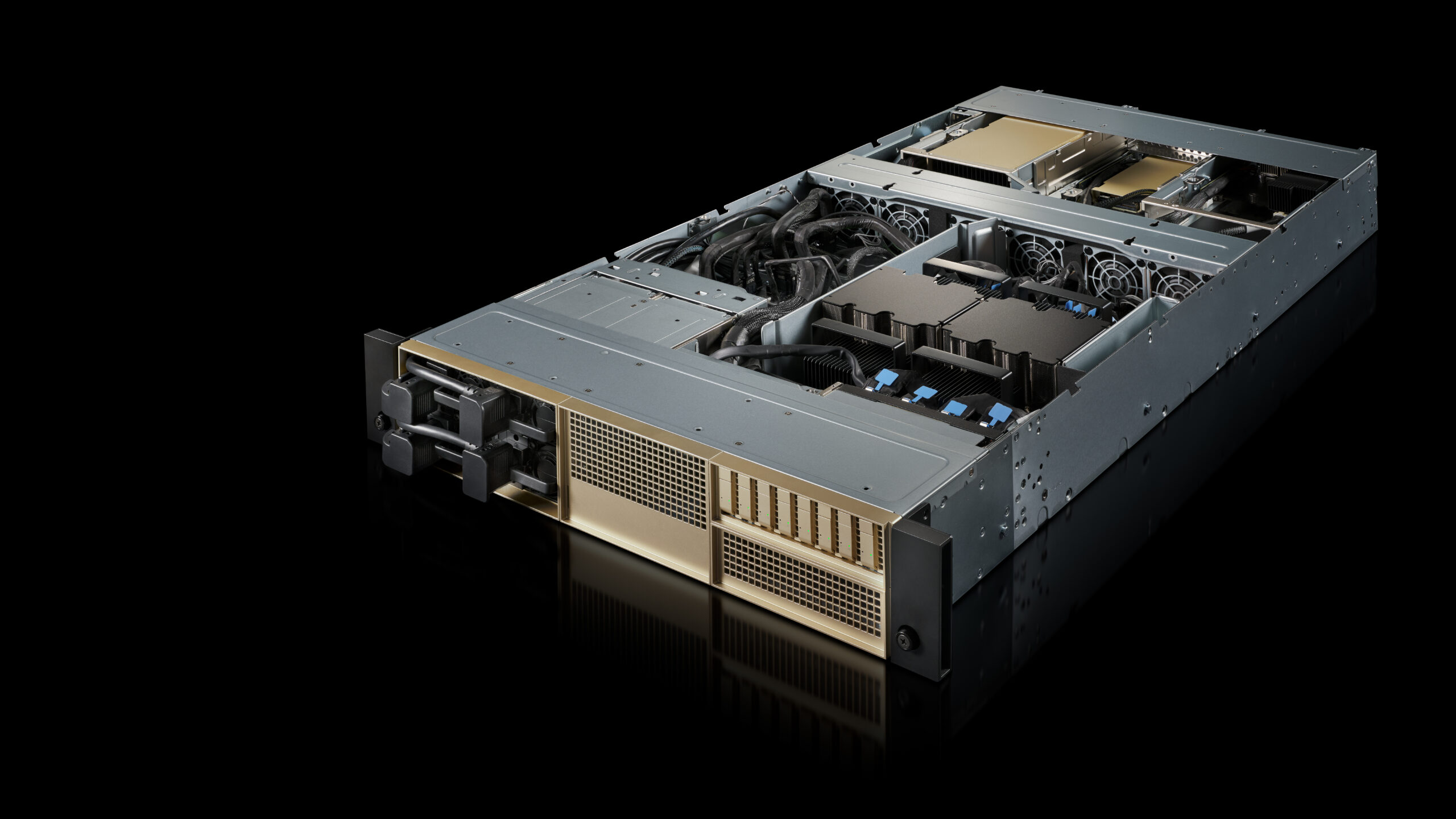
NVIDIA Unveils Vera CPU: A New Era for AI Workloads
NVIDIA has introduced its latest CPU, the Vera, which is specifically designed to meet the demands of agentic AI workloads in modern data centers. Initial benchmark results released by Phoronix indicate that the Vera CPU excels in performance, featuring 88 custom Olympus cores and an impressive memory bandwidth of 1.2 TB/s. This new architecture aims to optimize power consumption while delivering high throughput for AI applications.
Performance Driven by Custom Olympus Cores
The Vera CPU is built around NVIDIA’s custom Olympus cores, which are fully compatible with the Armv9.2 instruction set architecture. These cores are engineered to handle the sequential tasks that underpin agentic AI operations, including branch-heavy runtimes, sandboxed code execution, data processing, and orchestration. The monolithic die design of Vera allows for efficient data movement across all 88 cores, supported by advanced branch prediction and NVIDIA’s second-generation Scalable Coherency Fabric.
Phoronix’s testing of a single-socket Vera CPU, rated at a thermal design power (TDP) of 450 watts with under 30 watts allocated to memory power, revealed exceptional performance within this power envelope. The benchmarks covered a variety of workloads such as code compilation, file compression, video transcoding, and database management—tasks that are integral to the daily operations of AI factories. Michael Larabel, founder of Phoronix, noted that the Vera CPU presents formidable competition to existing Intel and AMD x86_64 processors.
Memory Performance: A Key Advantage
For agentic workloads, core count alone does not determine performance; high core utilization and sustained memory bandwidth are essential. The Vera CPU features a second-generation LPDDR5X memory subsystem that significantly reduces energy consumption per bit compared to traditional DDR5 memory. This innovation allows for a staggering 1.2 TB/s bandwidth while consuming less than 30 watts—up to twice the peak memory bandwidth compared to conventional CPUs that require over 100 watts for DDR5.
In Phoronix’s STREAM TRIAD tests, the Vera maintained an impressive 90% of its peak memory bandwidth—setting a record among tested CPUs—and achieved more than four times the memory bandwidth per core compared to traditional x86 CPUs. Larabel remarked on the remarkable memory performance advantage of NVIDIA’s Vera over current Intel Xeon and AMD EPYC processors.
Moreover, separate tests conducted by Prime Intellect demonstrated that as multiple workloads run simultaneously on Vera, it consistently maintains high bandwidth and low latency—characteristics crucial for effective agentic AI operations.
Generational Leap: Performance Gains Over Previous Models
The transition from NVIDIA’s previous-generation Grace CPU to Vera marks a significant advancement in performance metrics. In Phoronix testing, Vera achieved a geometric mean increase of 1.6 times compared to Grace—a remarkable generational improvement. Larabel expressed surprise at how consistently Vera exceeded expectations for generation-over-generation performance in processors.
Vera outperformed its peers in practical developer workloads as well. It delivered a 1.5 times overall performance advantage over a latest-generation 128-core x86 processor and completed Linux kernel compilation in just 20 seconds—the fastest time recorded by Phoronix in this category. On a per-core basis, it achieved double the speed compared to its x86 counterpart.
Furthermore, on a geometric mean basis, the NVIDIA Vera demonstrated a 10% performance edge over AMD’s EPYC 9575F processor running at 5 GHz—solidifying its position as a leading option for demanding computational tasks.
Availability and Ecosystem Support
NVIDIA announced broad ecosystem support for the Vera CPU during its GTC event. The company has begun delivering initial units of the Vera CPU to leading AI companies and cloud service providers as it moves toward wider availability later this year.
The Vera will be offered in both dual- and single-socket configurations with options for air-cooled or liquid-cooled systems tailored for AI factory deployments ranging from standard enterprise data centers to high-density infrastructures designed for agentic AI applications.
For those interested in learning more about this innovative technology, additional information can be found on NVIDIA’s official website dedicated to the Vera CPU.
What This Means
The release of NVIDIA’s Vera CPU signifies a pivotal moment in computing designed specifically for AI-driven environments. Its combination of high core counts, exceptional memory bandwidth efficiency, and competitive performance against established x86 processors positions it as a strong contender in the market for data center solutions tailored to artificial intelligence applications. As organizations increasingly adopt agentic AI technologies, CPUs like Vera will play an essential role in driving efficiency and performance across various workloads.
For more information, read the original report here.







