

















Chrome Enhances Search Experience with AI Mode Upgrades
Google has unveiled significant upgrades to its AI Mode in Chrome, aimed at streamlining the online search experience. This new feature, announced recently, allows users to access and interact with web content more efficiently without the need to switch between tabs. By integrating AI capabilities directly into the search process, Google seeks to enhance how users discover and engage with information online.
Seamless Browsing with Side-by-Side Views
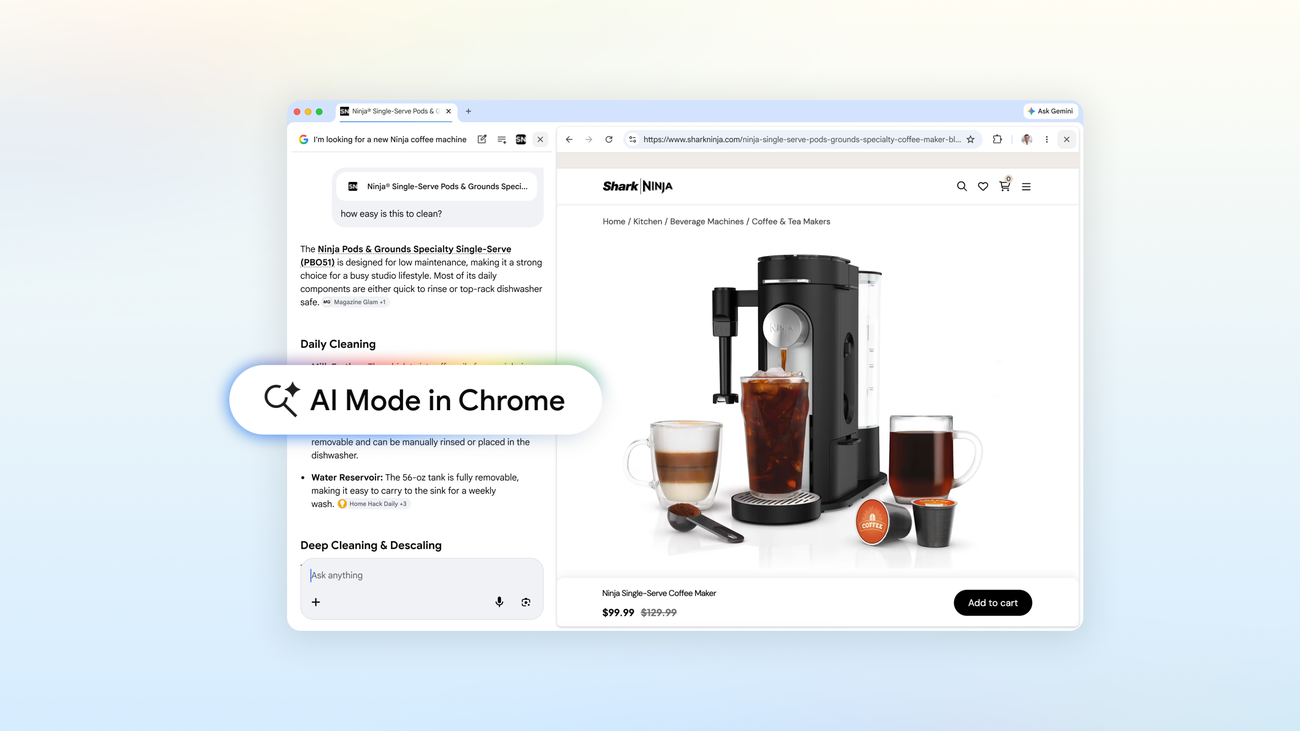
The latest iteration of AI Mode transforms how users navigate search results on Chrome desktop. When a user clicks on a link, the selected webpage now opens alongside the AI Mode interface. This side-by-side view facilitates easier exploration of relevant websites while allowing users to maintain context from their original search.
For instance, a user searching for a coffee maker suitable for a small apartment can utilize AI Mode to describe their specific needs. The upgraded feature will provide a variety of options tailored to those criteria. If a user finds a model that piques their interest, they can open the retailer’s website next to the AI interface. Here, they can pose follow-up questions such as, “How easy is this to clean?” The AI Mode draws from both the webpage and broader web data to deliver insightful answers, empowering users to make informed purchasing decisions.
Enhanced Contextual Understanding
The integration of contextual understanding is one of the standout features of this upgrade. Users no longer have to juggle multiple tabs or lose track of their original query while seeking additional information. By keeping the search context intact, AI Mode allows for deeper engagement with content without disrupting the user’s thought process.
This functionality is particularly beneficial for complex searches that require detailed comparisons or nuanced understanding. For example, students conducting research can easily reference academic articles while simultaneously interacting with AI-generated insights about related topics. This fluidity not only saves time but also enriches the learning experience by presenting diverse perspectives in real-time.
Implications for E-commerce and Online Learning
The enhancements in Chrome’s AI Mode hold significant implications for both e-commerce and online education sectors. For retailers, this feature could lead to higher conversion rates as potential buyers can quickly gather information and clarify doubts before making a purchase. The ability to ask specific questions directly related to products enhances customer confidence and satisfaction.
In the realm of education, students and learners benefit from a more interactive research process. The side-by-side browsing capability allows them to compare various sources of information effectively while receiving immediate feedback from AI tools. This could lead to improved academic performance as learners engage more deeply with their subjects.
Future Prospects for Search Technology
The advancements in Chrome’s search capabilities reflect broader trends in technology where artificial intelligence plays an increasingly central role in enhancing user experiences. As Google continues to refine its offerings, it sets a precedent for other tech companies looking to integrate similar functionalities into their platforms.
Moreover, these upgrades signal a shift towards more intuitive and responsive web interactions that prioritize user needs over traditional browsing methods. As users demand more seamless experiences online, innovations like those seen in Chrome’s AI Mode will likely become standard across various digital environments.
What This Means
The recent updates to Chrome’s AI Mode represent a significant step forward in how individuals access and interact with information online. By facilitating easier navigation between search results and relevant content without losing context, Google enhances productivity and decision-making processes for users across various domains—from shopping to academic research. As technology continues evolving, these improvements may redefine expectations around digital interactions and set new standards for future developments in search technology.
For more information, read the original report here.